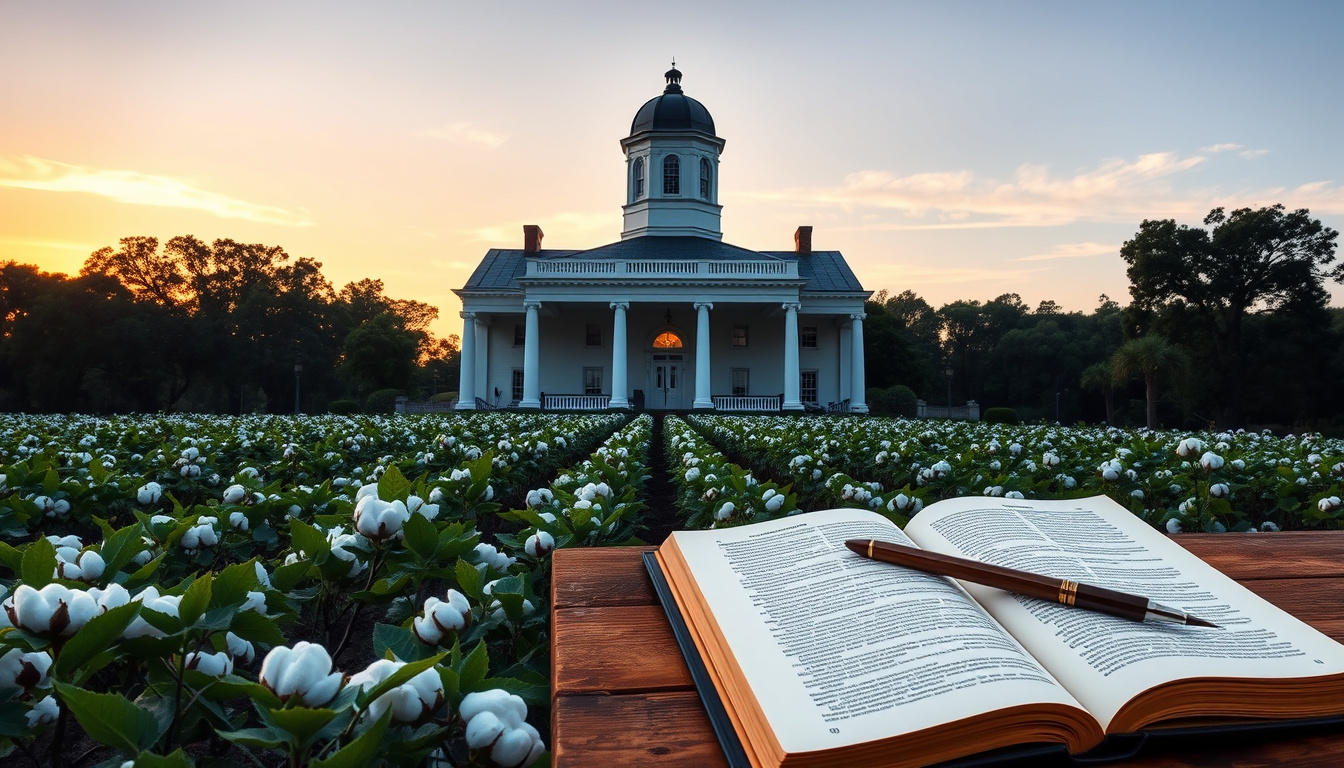
Thomas Jefferson authored the Declaration of Independence yet owned over 600 enslaved people—a contradiction that defines his legacy. This article examines both sides of the Founding Father, from his most famous quotes to the uncomfortable questions he left behind.
Born: April 13, 1743 ·
Died: July 4, 1826 ·
Presidency: 1801–1809 ·
Number of slaves owned: Approximately 600
Quick snapshot
- Primary author of the Declaration of Independence (Library of Congress)
- Owned over 600 enslaved people (Monticello)
- Died on July 4, 1826 (White House Historical Association)
- Whether Jefferson’s warning about racial conflict was a genuine prediction or a rhetorical device (Encyclopaedia Britannica)
- The full extent of his personal involvement in plantation management remains debated among historians (Miller Center)
- 1803: Louisiana Purchase doubled U.S. territory (History.com)
- 1826: Jefferson and John Adams die on the 50th anniversary of the Declaration (White House.gov)
- Ongoing historical research continues to refine the picture of Jefferson’s contradictions (National Park Service)
Ten key facts about Jefferson, one pattern: the distance between his ideals and his actions.
| Label | Value |
|---|---|
| Full Name | Thomas Jefferson |
| Born | April 13, 1743 (April 2 O.S.), Shadwell, Colony of Virginia |
| Died | July 4, 1826, Monticello, Virginia, U.S. |
| Presidential Term | 1801–1809 |
| Vice President | Aaron Burr (1801–1805), George Clinton (1805–1809) |
| Political Party | Democratic-Republican |
| Spouse | Martha Wayles Skelton (m. 1772; died 1782) |
| Children | 6 (including Martha Jefferson Randolph, only 2 survived to adulthood) |
| Education | College of William & Mary |
| Known for | Drafting the Declaration of Independence; Louisiana Purchase; Founding the University of Virginia |
What was Thomas Jefferson most famous for?
Drafting the Declaration of Independence
- Jefferson was the principal draftsman of the Declaration of Independence, a document that asserted fundamental human rights (Encyclopaedia Britannica).
- His original draft included a paragraph condemning the slave trade, which was removed by Congress (American Battlefield Trust).
Founding Father and third U.S. president
- He served as the third president of the United States from 1801 to 1809 (Encyclopaedia Britannica).
- Before that, he was the first secretary of state (1789–1794) and the second vice president (1797–1801) (Encyclopaedia Britannica).
Louisiana Purchase and westward expansion
- In 1803, Jefferson oversaw the Louisiana Purchase, which doubled the size of the United States (History.com).
- He also founded the University of Virginia in 1819 and served as its first rector (Monticello).
Jefferson championed universal rights in writing yet owned more enslaved people than any other U.S. president—over 600 individuals over his lifetime, according to White House Historical Association.
The implication: Jefferson’s most celebrated achievement—the Declaration—is haunted by the contradiction between “all men are created equal” and the institution of slavery he helped sustain.
What did Jefferson say about slavery?
Jefferson’s writings on slavery in ‘Notes on the State of Virginia’
- In 1785, Jefferson wrote in Notes on the State of Virginia that slavery violated the principles of the American Revolution and called it a “moral depravity” (Encyclopaedia Britannica).
- He also predicted that the failure to end slavery could lead to convulsions ending in the extermination of one race or the other (Encyclopaedia Britannica).
His personal slave ownership and contradictions
- Despite his rhetorical objections, Jefferson owned over 600 enslaved people over his lifetime, the most of any U.S. president (Monticello).
- He formally freed only seven people: five in his will and two during his lifetime (Library of Congress).
- Jefferson acquired his first enslaved people at age 14 when his father died (William & Mary Special Collections).
The ‘Negro president’ nickname and its historical context
- The term “Negro president” was used by Jefferson’s political opponents to highlight that the three-fifths compromise inflated southern electoral power, enabling his 1800 victory (Monticello).
- This nickname underscores the deep entanglement of slavery with American politics in Jefferson’s era.
Jefferson condemned slavery in principle while personally benefiting from it—a contradiction that defines his legacy and fuels ongoing debate about how to remember him.
The catch: Jefferson’s words against slavery are often quoted, but his actions—freeing only seven of 600 enslaved people—speak louder.
What did Jefferson say before he died?
Final words reported by his family
- Jefferson’s reported last words were “Is it the Fourth?”—a question about the date, as he died on July 4, 1826, the 50th anniversary of the Declaration of Independence (Encyclopaedia Britannica).
- His precise last words are debated among historians, but the phrase is the most commonly cited.
The timing of his death on July 4, 1826
- Jefferson died at Monticello, Virginia, on July 4, 1826 (White House.gov).
- John Adams, the second president and Jefferson’s fellow Founding Father, died the same day—a coincidence that underscored their intertwined legacy.
Connection to John Adams’ death on the same day
- Adams’s last words were reportedly “Thomas Jefferson survives,” unaware that Jefferson had died hours earlier (History.com).
- This dramatic convergence reinforced the symbolic power of the Declaration’s 50th anniversary.
The pattern: Jefferson’s death, like his life, was steeped in the symbolism of the nation he helped create.
What is Thomas Jefferson’s most famous quote?
‘All men are created equal’ from the Declaration
- The most famous line from the Declaration of Independence, drafted by Jefferson in 1776, is “We hold these truths to be self-evident, that all men are created equal” (National Archives).
- This phrase became the foundational slogan of American equality and has been invoked by abolitionists, suffragists, and civil rights leaders.
Other notable Jefferson quotations
- “I cannot live without books” — from a letter to John Adams in 1815 (Library of Congress).
- “The tree of liberty must be refreshed from time to time with the blood of patriots and tyrants” — from a 1787 letter to William Stephens Smith (Monticello).
Context and interpretations of his famous sayings
- Jefferson’s quotes are often used selectively, sometimes ignoring the context of his own slaveholding (Library of Congress).
- His words continue to inspire debates about the meaning of liberty and equality in America.
The trade-off: Jefferson’s most famous quote is a universal ideal, but his personal life stands as a counterexample that complicates its legacy.
Why was Jefferson called the Negro president?
Origin of the nickname
- Political opponents used the term “Negro president” to attack Jefferson’s legitimacy after the 1800 election, which was decided by the House of Representatives (Monticello).
- The nickname referred to the three-fifths compromise, which counted enslaved people as three-fifths of a person for representation and taxation, giving southern states extra electoral power.
Connection to the three-fifths compromise
- Without the additional representation from enslaved populations, Jefferson would have lost the electoral college to John Adams (White House Historical Association).
- This compromise was a direct result of the constitutional bargain over slavery, and Jefferson’s victory was a consequence of that bargain.
Historical significance
- The nickname exposes the central role of slavery in early American politics, a fact that Jefferson himself acknowledged in his writings but never fully addressed in policy (Library of Congress).
- It also highlights the irony of a man who wrote about liberty being elected through a system that inflated the power of slave states.
The implication: the “Negro president” label is a stark reminder that Jefferson’s political career was built on the same institution he condemned in private.
What did Thomas Jefferson say about Jesus?
Jefferson’s edited ‘Jefferson Bible’
- Jefferson created a version of the New Testament, now known as the Jefferson Bible, that removed all miracles and supernatural elements, focusing only on Jesus’s moral teachings (Library of Congress).
- He completed this work in 1820, cutting and pasting passages from the Gospels in Greek, Latin, French, and English.
His views on Christianity and deism
- Jefferson was a deist: he believed in a creator but rejected the divinity of Jesus, miracles, and the Trinity (Encyclopaedia Britannica).
- He wrote, “I am a Christian, in the only sense in which He wished anyone to be,” meaning a follower of Jesus’s moral teachings, not of orthodox Christianity (Monticello).
Correspondence on religious topics
- In his letters, Jefferson frequently discussed religion, advocating for religious freedom and criticizing the clergy (Library of Congress).
- His views made him a target of accusations of atheism during his political career, but he maintained that his faith was private and rational.
The trade-off: Jefferson’s selective embrace of Christianity allowed him to claim moral authority while rejecting the supernatural claims of the faith—a stance that reflects his Enlightenment rationalism.
Timeline: Key moments in Jefferson’s life
- 1743 – Thomas Jefferson born at Shadwell, Virginia (Encyclopaedia Britannica).
- 1775–1776 – Delegate to the Second Continental Congress; drafts the Declaration of Independence (National Archives).
- 1779–1781 – Governor of Virginia during the Revolutionary War (Encyclopaedia Britannica).
- 1785–1789 – U.S. Minister to France (Encyclopaedia Britannica).
- 1790–1793 – First U.S. Secretary of State under President George Washington (Encyclopaedia Britannica).
- 1797–1801 – Vice President under John Adams (Encyclopaedia Britannica).
- 1801–1809 – Third President of the United States (Encyclopaedia Britannica).
- 1803 – Oversees the Louisiana Purchase, doubling U.S. territory (History.com).
- 1819 – Founding of the University of Virginia; serves as first rector (Monticello).
- July 4, 1826 – Jefferson dies at Monticello on the 50th anniversary of the Declaration of Independence (White House.gov).
The chronological arc shows Jefferson’s public achievements and the persistent shadow of slavery.
Clarity: What we know vs. what remains unclear
Confirmed facts
- Jefferson was the primary author of the Declaration of Independence (Library of Congress).
- He owned approximately 600 slaves over his lifetime (Monticello).
- He died on July 4, 1826 (White House Historical Association).
- He created an edited version of the New Testament, the Jefferson Bible (Library of Congress).
What’s unclear
- The exact number of children he fathered with Sally Hemings is uncertain; historians generally accept six, with some debate (Miller Center).
- His precise last words are debated; the most commonly reported phrase is “Is it the Fourth?” (History.com).
- The extent of his personal involvement in the daily management of his slaves is not fully documented (Miller Center).
- Whether Jefferson’s warning about racial conflict was a genuine prediction or a rhetorical device remains debated (Encyclopaedia Britannica).
The unresolved questions remind us that historical certainty is often elusive.
Quotes from Jefferson and his contemporaries
“We hold these truths to be self-evident, that all men are created equal, that they are endowed by their Creator with certain unalienable Rights.”
— Thomas Jefferson, Declaration of Independence, 1776 (National Archives)
“The whole commerce between master and slave is a perpetual exercise of the most boisterous passions, the most unremitting despotism on the one part, and degrading submissions on the other.”
— Thomas Jefferson, Notes on the State of Virginia, 1785 (Encyclopaedia Britannica)
“I cannot live without books.”
— Thomas Jefferson, letter to John Adams, 1815 (Library of Congress)
“Adore God. Reverence and cherish your parents. Love your neighbor as yourself, and your country more than yourself. Be just. Be true. Murmur not at the ways of Providence.”
— Thomas Jefferson, letter to Thomas Jefferson Smith, 1825 (Monticello)
“Thomas Jefferson survives.”
— John Adams, reported last words, July 4, 1826 (History.com)
Jefferson’s contradictions are not just historical curiosities—they force a reckoning with the founding ideals of the United States. For modern readers, the choice is clear: either embrace the full complexity of the man, or risk misreading the nation he helped create.
washingtonpost.com, en.wikipedia.org, en.wikipedia.org, loc.gov
For a comprehensive overview of his life and contradictions, see Thomas Jeffersons biography and legacy.
Frequently asked questions
When was Thomas Jefferson born?
April 13, 1743 (April 2, Old Style), in Shadwell, Virginia (Encyclopaedia Britannica).
Where did Thomas Jefferson go to college?
He attended the College of William & Mary in Williamsburg, Virginia (William & Mary Special Collections).
Was Thomas Jefferson a president?
Yes, he served as the third president of the United States from 1801 to 1809 (Encyclopaedia Britannica).
What political party did Thomas Jefferson belong to?
He was a member of the Democratic-Republican Party (Encyclopaedia Britannica).
What major territory did Thomas Jefferson acquire?
He oversaw the Louisiana Purchase in 1803, which doubled the size of the United States (History.com).
Did Thomas Jefferson have children?
Yes, he had six children with his wife Martha Wayles Skelton; only two survived to adulthood (Monticello).
How old was Thomas Jefferson when he became president?
He was 57 years old when he took office in 1801 (Encyclopaedia Britannica).
What buildings did Thomas Jefferson design?
He designed the Virginia State Capitol, the University of Virginia’s Rotunda, and his own home Monticello, among others (Monticello).
Related stories




Jonathan MacDonald is Editor-in-Chief at Civic Maple, overseeing editorial standards, publication decisions and corrections.