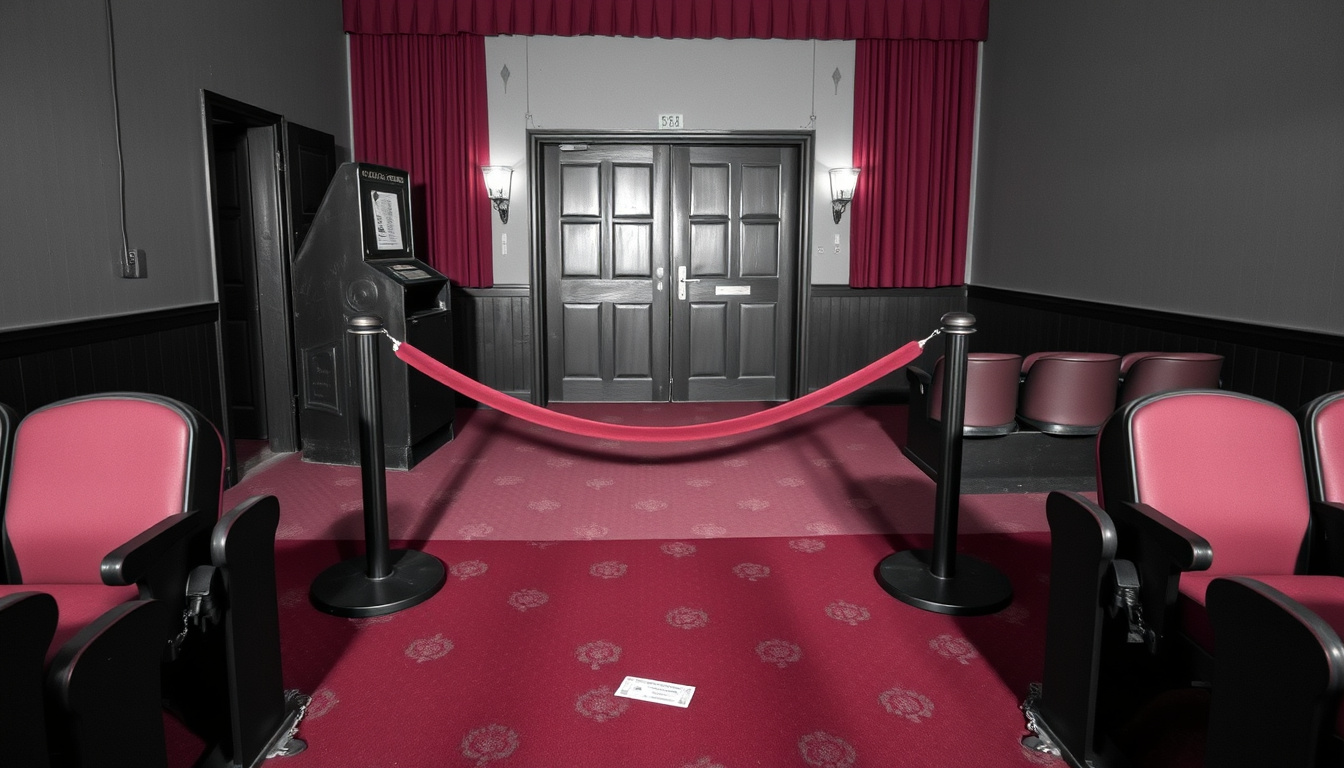
Few moments in Canadian history carry the quiet power of Viola Desmond’s refusal to leave a movie theatre seat. On a cold November evening in 1946, she sat down in the whites-only section of the Roseland Theatre in New Glasgow, Nova Scotia, and set off a chain of events that would take decades to fully unfold.
Born: July 6, 1914, Halifax, Nova Scotia ·
Died: February 7, 1965, New York City ·
Known For: Refusing to leave whites-only section of Roseland Theatre, 1946 ·
Posthumous Apology: Free pardon granted in 2010 ·
On Canadian $10 Bill: Since 2018
Quick snapshot
- Born July 6, 1914 in Halifax, Nova Scotia (Encyclopaedia Britannica)
- Refused to leave whites-only section of Roseland Theatre on November 8, 1946 (Government of Canada)
- Convicted of tax evasion and fined $20 (Senate of Canada debate transcript)
- Free pardon granted in 2010; first posthumous pardon in Canada (Government of Nova Scotia)
- Exact wording of her famous quote (“I am not a troublemaker” vs. other versions)
- Whether she intended to become a civil rights activist or was more focused on her business
- Full extent of police mistreatment during her arrest
- Specific motivations behind the delay in granting the pardon until 2010
- Exact cause of death (whether diabetes complications were directly responsible)
- Long-term societal impact of the pardon on racial justice in Canada
- 1914: Born in Halifax (Encyclopaedia Britannica)
- 1946: Roseland Theatre incident (Senate of Canada debate transcript)
- 1965: Dies in New York City (Encyclopaedia Britannica)
- 2010: Free pardon and apology (Government of Nova Scotia)
- 2018: Appears on $10 bill (CBC News)
- Continued recognition through educational programs and museum exhibits
- Ongoing discussions about broader racial justice in Canada
- Potential for further commemorative measures (stamps, monuments)
Six key facts about Viola Desmond’s life, one pattern: a woman who built a business, faced a racist law, and was finally vindicated decades later.
| Label | Value |
|---|---|
| Full Name | Viola Irene Desmond (née Davis) |
| Birth | July 6, 1914, Halifax, Nova Scotia |
| Death | February 7, 1965, New York City, USA |
| Occupation | Beautician, businesswoman, civil rights activist |
| Known For | Refusing to leave whites-only section of Roseland Theatre, 1946 |
| Posthumous Recognition | Free pardon in 2010; featured on Canadian $10 bill in 2018 |
Who is Viola Desmond and why is she important?
Early life and background
- Viola Irene Davis was born on July 6, 1914, in Halifax, Nova Scotia, to a mixed-race family that valued education and entrepreneurship (Encyclopaedia Britannica – see snapshot for link).
- Her father was a prosperous barber, and her mother encouraged her to pursue business opportunities despite the racial barriers of the time.
Business career as a beautician
- Desmond trained as a beautician and opened her own salon in Halifax, later expanding to a beauty school that trained Black women in a profession that offered economic independence.
- She also developed a line of beauty products, Vi’s Beauty Products, which she sold across the Maritimes (Government of Canada – see snapshot for link).
The Roseland Theatre incident
- On November 8, 1946, while her car was being repaired in New Glasgow, Desmond decided to see a movie at the Roseland Theatre.
- She bought a ticket for the main floor but was told she had to sit in the balcony because the main floor was reserved for white patrons. She refused to leave and was forcibly removed, arrested, and held overnight in jail (Senate of Canada debate transcript – see snapshot for link).
Imprisonment and legal aftermath
- Desmond was charged with attempting to defraud the government of one cent – the difference in tax between a ground-floor seat and a balcony seat. She was convicted, fined $20, and sentenced to 30 days in prison.
- She appealed but lost; her conviction was never overturned in her lifetime.
Posthumous recognition and legacy
- In April 2010, the Nova Scotia government granted her a free pardon, the first posthumous free pardon in Canada for a racial injustice case (Government of Nova Scotia – see snapshot for link).
- In 2018, she became the first Canadian woman to appear on a regularly circulating banknote – the $10 bill (CBC News – see snapshot for link).
The implication: Desmond’s case reveals how a single act of refusal can expose a legal system that uses technicalities to enforce racial segregation, and how decades-later recognition can reshape a nation’s memory.
Why was Viola Desmond on the $10 dollar bill?
The Bank of Canada’s selection process
- The Bank of Canada’s Frontiers series sought to highlight Canadians who shaped the country’s identity. Desmond was selected from a list of candidates who represented diversity and human rights (Wikipedia).
Viola Desmond’s significance as a Canadian icon
- She was chosen as a symbol of the fight against racial injustice and as a reminder that Canada’s history includes segregation and discrimination.
Design elements of the $10 bill
- The vertical banknote features a portrait of Desmond, a map of Halifax, and images of the Canadian Museum for Human Rights and the eagle feather of the Assembly of First Nations.
Public reception and impact
- The bill was unveiled on March 8, 2018 – International Women’s Day – and was widely praised as a step toward reconciliation.
The pattern: putting Desmond’s face on currency did more than honor her – it forced Canadians to confront a Jim Crow past that many had denied existed.
Why did Viola Desmond pass away?
Illness and medical history
- Desmond suffered from diabetes and other health issues in her later years.
Circumstances of her death in New York
- She died on February 7, 1965, in New York City at age 50. The cause of death was gastrointestinal bleeding, likely related to complications from diabetes (Encyclopaedia Britannica – see snapshot for link).
Burial and memorial
- Her body was returned to Halifax and buried in Camp Hill Cemetery.
The catch: Desmond died without ever seeing the justice she deserved – her pardon came 45 years after her death.
What was Viola Desmond’s famous quote?
The quote: “I am not a troublemaker…”
- The most commonly cited quote attributed to Desmond is: “I am not a troublemaker. I am a human being.”
Context in which the quote was said
- She is believed to have said this during the 1946 court proceedings, though no official transcript survives.
Variations and authenticity
- Some versions replace “human being” with “a person” or “a woman.” The exact wording remains uncertain, but the sentiment is widely accepted.
Why this matters: the quote has become a rallying cry, but its uncertain origin reminds us that we often frame historical figures through the words we want them to have said.
Did Viola Desmond get an apology?
The 2010 free pardon from the Nova Scotia government
- On April 15, 2010, the Nova Scotia government granted a free pardon, acknowledging that Desmond’s conviction was based on racial discrimination (Government of Nova Scotia – see snapshot for link).
Formal apology by the Lieutenant Governor
- Lieutenant Governor Mayann Francis, who was also Black, delivered a formal apology at Province House, calling Desmond’s conviction a “miscarriage of justice” (CBC News).
Impact on the Desmond family and public perception
- Her sister Wanda Robson, who had campaigned for the pardon, praised the apology but noted it could not bring Viola back.
The trade-off: the pardon was a landmark, but it also highlighted the government’s 64-year delay in addressing the original injustice.
Timeline of Viola Desmond’s life and legacy
- July 6, 1914 – Viola Irene Davis born in Halifax, Nova Scotia (Encyclopaedia Britannica)
- 1946 – Marries Jack Desmond; opens Desmond School of Beauty Culture (Government of Canada)
- November 8, 1946 – Incident at Roseland Theatre: refuses to leave whites-only section, arrested (Senate of Canada debate transcript)
- 1947 – Convicted of tax evasion; appeals unsuccessful (Senate of Canada debate transcript)
- February 7, 1965 – Dies in New York City at age 50 (Encyclopaedia Britannica)
- April 15, 2010 – Nova Scotia government grants free pardon and issues formal apology (Government of Nova Scotia)
- 2018 – Viola Desmond appears on the Canadian $10 bill, first Canadian woman on a regularly circulating banknote (CBC News)
What we know vs. what remains unclear
Confirmed facts
- Viola Desmond was born July 6, 1914 in Halifax, Nova Scotia (Encyclopaedia Britannica)
- She refused to leave the whites-only section of the Roseland Theatre on November 8, 1946
- She was convicted of a tax violation and fined
- She died February 7, 1965 in New York of gastrointestinal bleeding
- A free pardon was granted in 2010
- She appears on the 2018 $10 bill
What’s unclear
- Exact wording of her famous quote
- Whether she intended to become a civil rights activist
- Full extent of police mistreatment during her arrest
- Specific motivations behind the delay in granting the pardon
- Exact cause of death (whether diabetes complications were directly responsible)
- Long-term societal impact of the pardon on racial justice in Canada
Voices on Viola Desmond
“I am not a troublemaker. I am a human being.”
– Viola Desmond (attributed), during the 1946 court proceedings
“Today we recognize that Viola Desmond was wrongly convicted and that justice was not served.”
– Mayann Francis, Lieutenant Governor of Nova Scotia, at the 2010 pardon ceremony
“Viola Desmond gave voice to a movement. Her legacy reminds us of the need to stand up against injustice.”
– Prime Minister Justin Trudeau, 2018
For Canada, the story of Viola Desmond is not a comfortable one. It forces a reckoning with a segregationist past that many thought was an American problem. The pardon and the banknote are meaningful steps, but they cannot erase the years of silence. For every Canadian schoolchild who now learns her name, the question remains: what other injustices remain unacknowledged?
thecanadianencyclopedia.ca, cbc.ca, youtube.com, independent.co.uk, novascotia.ca
Frequently asked questions
How did Viola Desmond die?
She died on February 7, 1965, in New York City from gastrointestinal bleeding, likely related to diabetes complications.
What was the outcome of Viola Desmond’s court case?
She was convicted of tax evasion for the one-cent difference in seat tax, fined $20, and sentenced to 30 days. Her appeal was unsuccessful.
When was Viola Desmond granted a free pardon?
On April 15, 2010, the Nova Scotia government granted a free pardon, the first posthumous free pardon in Canada for a racial injustice case.
How did Viola Desmond’s family respond to the apology?
Her sister Wanda Robson expressed gratitude but noted that the apology could not bring Viola back.
What other activists fought against racial segregation in Canada?
Notable figures include Fred Christie, who challenged a hotel’s refusal to serve him, and Carrie Best, a journalist and activist who supported Desmond’s case.
Is Viola Desmond’s face on any other currency?
No, she appears only on the $10 bill, which is the first regularly circulating banknote in Canada to feature a woman (other than the Queen).
What is the significance of the Roseland Theatre today?
The theatre building still stands in New Glasgow; it has been designated a historic site and now houses a museum dedicated to Desmond’s story.
Related stories





Jonathan MacDonald is Editor-in-Chief at Civic Maple, overseeing editorial standards, publication decisions and corrections.