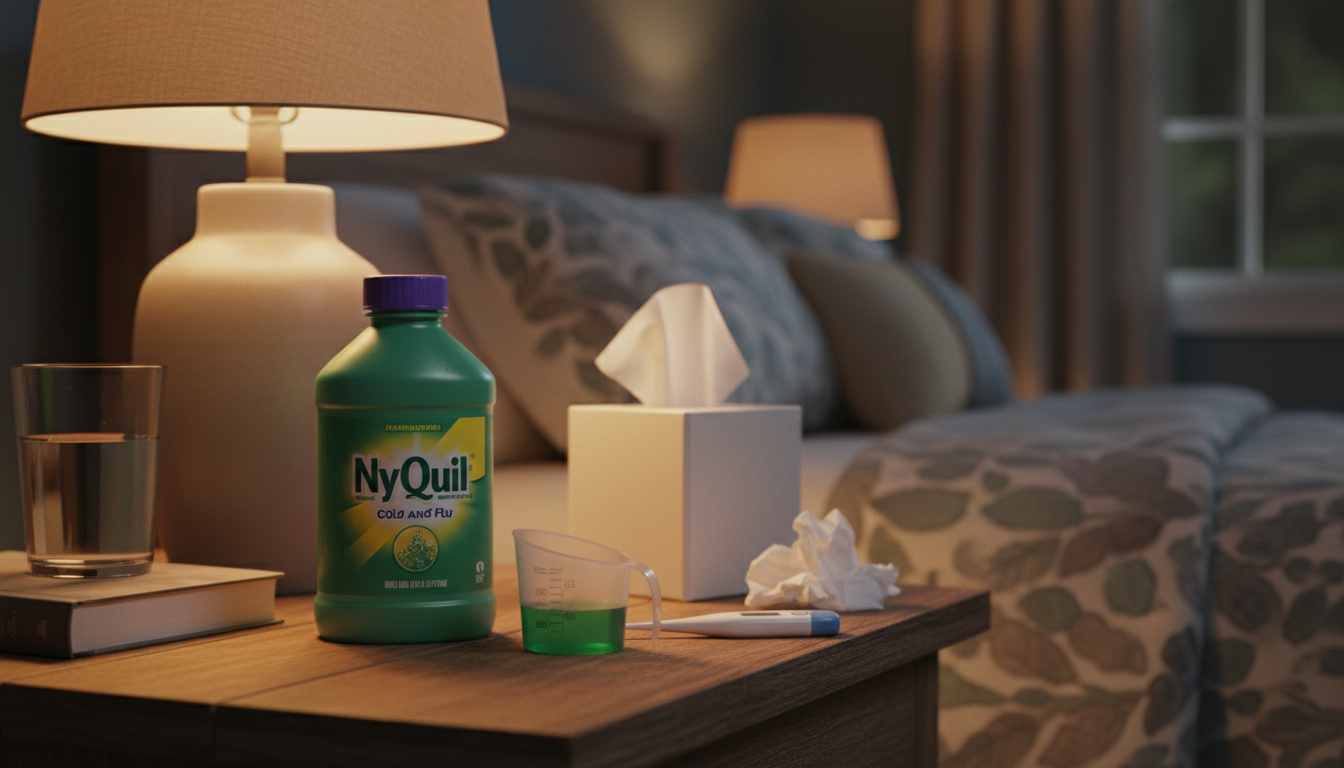

NyQuil Cold and Flu is a multi-symptom over-the-counter medication designed for nighttime relief of cough, sore throat, runny nose, fever, headache, and minor aches. Each liquiCap contains acetaminophen (325 mg), dextromethorphan HBr (15 mg), and doxylamine succinate (6.25 mg), a combination that targets discomfort while inducing drowsiness to facilitate sleep.
Marketed by Vicks, the product sits alongside remedies like Mexican Street Corn Recipe – Authentic Elote Guide in the cultural landscape of home care, though its pharmacological profile requires careful attention to dosing limits and contraindications. The formulation is available in both liquiCap and liquid forms, with the latter containing 10 percent alcohol by volume.
While widely used during cold and flu season, the medication carries specific risks regarding liver toxicity, pediatric safety, and interactions with other central nervous system depressants. Understanding these parameters is essential for safe administration.
What Are the Ingredients in NyQuil Cold and Flu?
The medication relies on three active compounds working synergistically to suppress symptoms. Acetaminophen functions as the analgesic and antipyretic, dextromethorphan HBr acts as a cough suppressant, and doxylamine succinate provides antihistamine effects that reduce runny nose while causing sedation. According to DailyMed labeling, these concentrations remain consistent across standard liquiCap servings.
- Acetaminophen (325mg): Non-aspirin pain reliever and fever reducer
- Dextromethorphan HBr (15mg): Cough suppressant affecting brain signals triggering cough reflex
- Doxylamine Succinate (6.25mg): Antihistamine causing drowsiness and drying secretions
- Formulation Variants: LiquiCaps (alcohol-free) versus Liquid (10% alcohol content)
Key clinical observations regarding this formulation include:
- The triple-action approach addresses multiple symptom pathways simultaneously
- Doxylamine represents the primary sedating agent, distinguishing this from daytime alternatives
- Acetaminophen content necessitates strict liver safety monitoring
- Liquid formulations contain sodium and alcohol, excluding certain patient populations
- Severe variants add phenylephrine for nasal congestion relief
- Fixed-dose combinations reduce pill burden but limit individual component titration
- Capsule formulations eliminate alcohol exposure while maintaining identical active ingredients
| Specification | Standard LiquiCap | Liquid (30mL) |
|---|---|---|
| Acetaminophen | 325 mg | 650 mg |
| Dextromethorphan HBr | 15 mg | 30 mg |
| Doxylamine Succinate | 6.25 mg | 12.5 mg |
| Alcohol Content | 0% | 10% |
| Sodium Content | Not specified | Present |
| Dosing Interval | Every 6 hours | Every 6 hours |
| Max Daily Doses | 4 doses (8 caps) | 4 doses (120mL) |
| Primary Indication | Nighttime relief | Nighttime relief |
How Much NyQuil Cold and Flu Should You Take?
Adult Dosing Parameters
Adults and children 12 years and older may take 2 liquiCaps or 30 mL of liquid every 6 hours as needed for symptoms. GoodRx guidelines emphasize that users must not exceed 4 doses in any 24-hour period. Each dose delivers 650 mg of acetaminophen when using the liquid formulation, meaning maximum daily acetaminophen exposure reaches 2600 mg from this product alone.
Exceeding 4 doses within 24 hours creates immediate risk of severe liver damage. This risk amplifies when combining NyQuil with other acetaminophen-containing products or consuming alcohol regularly.
Pediatric Restrictions
The medication is not recommended for children under 12 years of age. EMPR prescribing information explicitly contraindicates use in children 3 years and younger. Pediatric patients may experience paradoxical excitation or nervousness rather than the intended sedative effects.
Duration of Treatment Limits
NyQuil is formulated for short-term symptom management only. Users should discontinue the medication if pain or cough persists beyond 7 days, or if fever lasts more than 3 days. Continuous nightly use beyond these timeframes risks hepatic injury, tolerance development, and masking of underlying bacterial infections requiring antibiotic therapy.
What Are the Side Effects and Warnings for NyQuil?
Common and Serious Adverse Effects
The most frequently reported adverse reaction is marked drowsiness, occurring in a significant portion of users due to doxylamine’s anticholinergic properties. Additional common effects include dizziness, constipation, nausea, headache, dry mouth, and blurred vision. Clinical surveillance also identifies rare but serious risks: hepatotoxicity from acetaminophen overdose, serotonin syndrome when combined with MAOIs, severe cutaneous reactions, and hallucinations or seizures resulting from dextromethorphan misuse at supratherapeutic doses.
Doxylamine-induced sedation impairs motor coordination and judgment. Patients must avoid driving, operating heavy machinery, or performing tasks requiring mental alertness until fully aware of individual reaction to the medication.
Contraindications and Interactions
The product is absolutely contraindicated in patients taking monoamine oxidase inhibitors (MAOIs) or within 14 days of MAOI discontinuation due to potentially fatal serotonin syndrome. Other contraindications include narrow-angle glaucoma, asthma, lower respiratory disorders, gastrointestinal or genitourinary obstruction, and benign prostatic hyperplasia. The liquid formulation’s alcohol content prohibits use in individuals with alcohol use disorder or those taking disulfiram.
Hepatic Safety Considerations
Acetaminophen metabolism occurs primarily in the liver. Patients with hepatic impairment, chronic alcohol consumption (3+ drinks daily), or concurrent use of other hepatotoxic drugs face elevated risk of acute liver failure. Symptoms of toxicity may not manifest until 24 hours post-overdose, delaying critical intervention.
Does NyQuil Cold and Flu Help with Specific Symptoms?
Cough and Upper Respiratory Relief
Dextromethorphan effectively suppresses the cough reflex by acting on central medullary centers, providing temporary relief from irritating dry cough. Doxylamine reduces rhinorrhea and sneezing through antihistaminic action. Comparative analysis indicates that while standard NyQuil targets runny nose and cough, the Severe variant adds phenylephrine to address nasal congestion specifically.
Worsening symptoms or failure to improve within 7 days for pain/cough, or 3 days for fever, necessitates medical evaluation to rule out secondary bacterial infection or alternative diagnoses.
Onset and Duration of Action
While specific pharmacokinetic data regarding onset of action remains unspecified in available literature, the 6-hour dosing interval suggests therapeutic effects persist approximately 4-6 hours per dose. Peak plasma concentrations of acetaminophen generally occur within 30-60 minutes, while doxylamine’s sedative effects manifest within 30 minutes of ingestion.
COVID-19 Symptom Management
No clinical evidence supports the use of NyQuil for treating COVID-19. The medication addresses symptomatic relief of common cold and influenza viruses but does not possess antiviral properties against SARS-CoV-2. Patients experiencing COVID-like symptoms should seek medical advice rather than relying solely on over-the-counter symptom suppressants.
NyQuil vs. DayQuil: Key Differences
The distinction between these sibling products centers on their antihistamine profiles and intended use timing. While both share acetaminophen and dextromethorphan cores, their third active ingredients create fundamentally different pharmacological experiences.
| Characteristic | NyQuil Cold and Flu | DayQuil Severe |
|---|---|---|
| Sedation | Yes (doxylamine) | No |
| Decongestant | No (standard)/Yes (Severe) | Yes (phenylephrine) |
| Optimal Use | Before sleep | Daytime activities |
| Primary Symptom Target | Runny nose, cough, pain | Stuffy nose, cough, pain |
| Alcohol Content | 10% (liquid only) | None |
DayQuil replaces doxylamine with phenylephrine, a non-sedating decongestant that alleviates nasal congestion without causing drowsiness. This substitution allows users to maintain alertness while managing daytime symptoms, whereas NyQuil’s formulation prioritizes sleep induction.
How Has NyQuil Evolved Over Time?
The product timeline reflects shifting regulatory standards and formulation science regarding over-the-counter cold medications.
- – Initial market introduction as a nighttime cold remedy
- – Reformulation phases addressing acetaminophen safety labeling and child-resistant packaging mandates
- – Severe variant updates incorporating additional decongestant options
These iterations respond to FDA guidance regarding acetaminophen hepatotoxicity warnings and consumer demand for alcohol-free capsule alternatives.
What Do We Know About NyQuil’s Effectiveness?
Clinical understanding of this medication involves both established pharmacological actions and areas requiring further investigation.
Established Evidence
- Acetaminophen effectively reduces fever and mild to moderate pain within 30-60 minutes
- Dextromethorphan demonstrates statistically significant cough suppression versus placebo
- Doxylamine reliably induces sedation suitable for nighttime use
- 4-dose daily maximum represents the liver safety threshold for acetaminophen
Uncertain or Unspecified
- Precise duration of therapeutic action per dose
- Safety profile for continuous use exceeding 7 consecutive nights
- Efficacy specifically against COVID-19 symptomatology
- Long-term neurochemical effects of repeated doxylamine exposure
Why Do People Choose NyQuil for Nighttime Relief?
The medication occupies a specific niche in self-care regimens by addressing the sleeplessness that accompanies respiratory illness. While remedies like Sutton Place Hotel Toronto – Amenities, Reviews and Rates Guide emphasize environmental comfort for rest, NyQuil provides pharmacological facilitation of sleep when physical symptoms prevent natural rest cycles.
Its market position relies on the convenience of multi-symptom relief in a single dose, reducing the cognitive burden of managing multiple single-ingredient medications during illness. However, this convenience requires users to accept fixed ratios of analgesic, antitussive, and antihistamine rather than customizing treatment to specific symptom severity.
What Do Medical Sources Say About NyQuil?
Regulatory and manufacturer sources provide specific guidance regarding safe use parameters.
Use with caution during pregnancy or nursing. Consult a healthcare provider before use if you have liver disease, glaucoma, or difficulty urinating due to enlarged prostate.
Pharmacovigilance data compiled through GoodRx monitoring and FDA adverse event reporting systems consistently highlight acetaminophen overdose as the primary preventable harm associated with this product class.
Is NyQuil Right for Your Cold Symptoms?
NyQuil Cold and Flu offers effective temporary relief for adults experiencing nighttime cough, fever, and rhinorrhea, provided users adhere strictly to dosing limits and contraindications. It is not suitable for children under 12, patients with liver disease, or those requiring mental alertness. While Mexican Street Corn Recipe – Authentic Elote Guide might provide comfort during recovery, this medication addresses physiological symptoms only, not underlying viral infections. Consult healthcare providers if symptoms persist beyond 7 days or worsen despite treatment.
Frequently Asked Questions
Can you mix NyQuil with alcohol?
No. Alcohol increases liver toxicity risk and enhances sedation. Liquid NyQuil contains 10% alcohol, making additional consumption dangerous.
Is NyQuil safe during pregnancy?
Use only with caution and medical consultation. Precautions are noted for pregnancy and nursing; healthcare provider guidance is essential.
How long does NyQuil take to work?
Sedative effects typically begin within 30 minutes. Pain and fever reduction may occur within 30-60 minutes of ingestion.
Can children take NyQuil?
Not recommended for children under 12. Never use in children 3 years or younger due to risk of serious side effects.
What happens if you take too much NyQuil?
Overdose risks include severe liver damage from acetaminophen, excessive sedation, respiratory depression, and potential seizures. Seek immediate medical attention.
Does NyQuil expire?
Yes. Check packaging for expiration dates. Expired medication may lose potency and should be properly disposed of according to pharmacy guidelines.
Related stories




Thomas Fraser is Politics & Public Affairs Editor, covering federal and provincial policy in Canada.