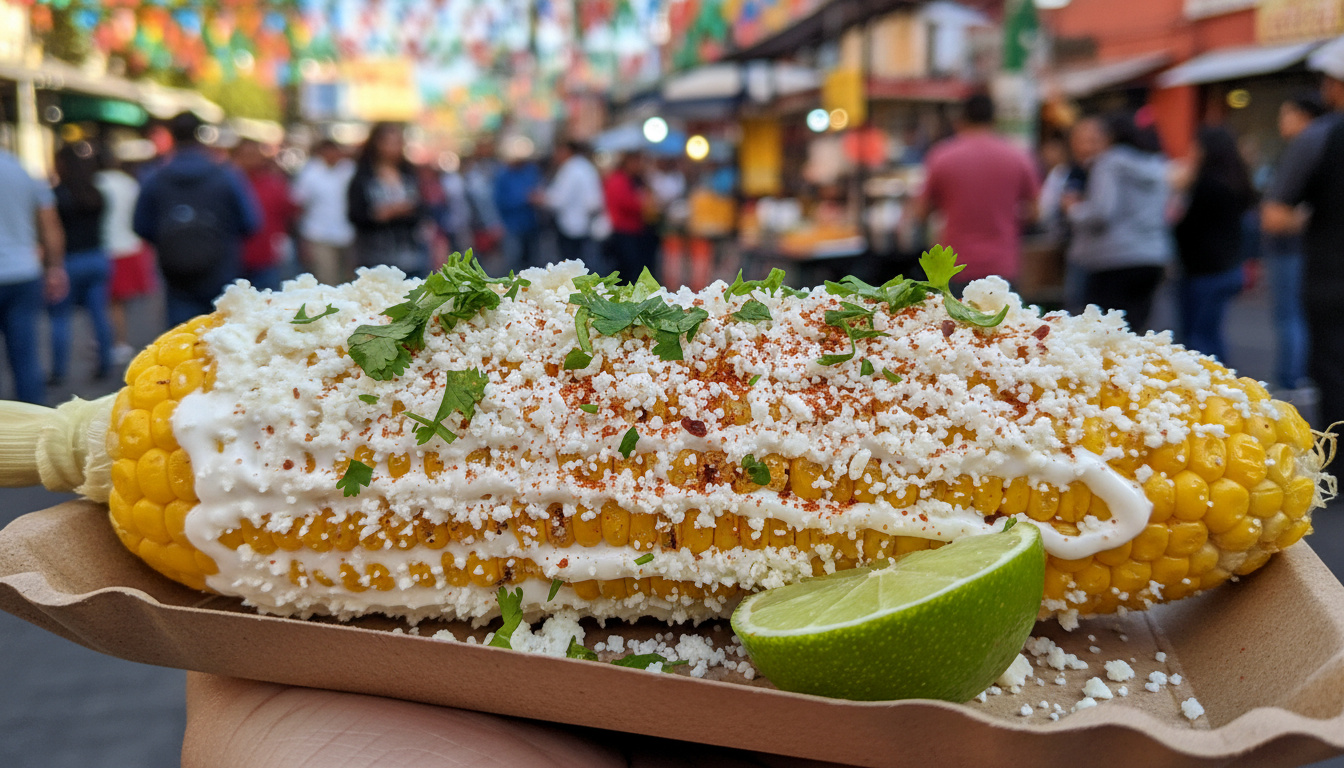

Elote stands as one of Mexico’s most beloved street foods, combining the sweetness of grilled corn with the richness of creamy toppings and the sharp bite of chili and lime. This traditional preparation transforms simple corn on the cob into a portable feast that balances smoky, savory, spicy, and acidic elements in every bite.
Unlike standard boiled corn, authentic Elote (Mexican Street Corn) requires specific ingredients and techniques passed down through generations. The dish represents more than a recipe; it embodies thousands of years of Mesoamerican agricultural history merged with Spanish colonial influences.
Understanding the fundamentals of preparation, ingredient selection, and cultural context ensures home cooks can replicate the genuine street food experience without specialized equipment or hard-to-find components.
What Is Mexican Street Corn (Elote)?
- The word derives from the Nahuatl elotl, meaning tender cob
- Corn cultivation in Mesoamerica dates to 6600 B.C.E.
- Ancient civilizations including Olmecs, Mayans, and Aztecs cultivated corn as a spiritual staple
- Modern creamy preparations emerged after Spanish conquest introduced dairy and mayonnaise
- Contemporary elote gained prominence as street food in Mexico City
- The dish is traditionally served hot with visible char marks
- Esquites, the off-the-cob salad version, traces directly to Aztec cuisine
| Component | Traditional Ingredient | Function |
|---|---|---|
| Base | Fresh sweet corn | Provides sweetness and texture |
| Cream | Mayonnaise or Mexican crema | Adds richness and helps toppings adhere |
| Cheese | Cotija | Delivers salty, crumbly contrast |
| Heat | Chili powder or Tajín | Adds spice and visual appeal |
| Acid | Fresh lime | Balances fat and enhances corn sweetness |
| Aromatics | Cilantro | Adds fresh, herbaceous notes |
Ingredients for Authentic Mexican Street Corn
Selecting the Best Corn
Fresh, sweet corn forms the foundation of authentic elote. The kernels should be plump and tightly packed, with bright green husks that feel slightly damp. While frozen corn may work in cooked preparations, the charred, on-the-cob experience requires fresh ears that can withstand direct heat without becoming mushy.
Choose corn with silks that are golden or slightly brown rather than blackened, indicating optimal ripeness. The corn requires grilling until charred to bring out natural sweetness while adding essential smoky flavor.
The Creamy Base
Traditional recipes call for mayonnaise or Mexican crema, which offers a slightly tangier profile than standard mayonnaise. This coating serves as the adhesive that allows cheese and spices to stick to the kernels. The fat content creates a barrier that prevents the corn from drying during high-heat cooking.
Cheese and Seasonings
Cotija cheese provides the distinctive salty, crumbly texture that defines the dish. Unlike melting cheeses, cotija maintains its structure when sprinkled over the warm corn. Chili powder or Tajín seasoning supplies the heat, while fresh lime wedges cut through the richness. Cilantro remains optional but traditional as a final garnish.
How to Make Mexican Street Corn Step by Step
Par-Cooking the Corn
Bring a large pot of salted water to a rolling boil and cook the corn for approximately ten minutes until tender. Alternatively, an Instant Pot can reduce cooking time while maintaining texture. This initial cooking ensures the kernels are fully cooked before grilling, preventing the charred exterior from masking raw corn inside.
Grilling for Char and Smoke
Brush the cooked corn with melted butter and place on medium-high heat. Rotate frequently until slight charring appears on multiple sides. This step transforms the dish from simple boiled corn to authentic street food, adding the smoky flavor that distinguishes elote from basic preparations.
Assembly and Toppings
Mix mayonnaise with Mexican crema in a small bowl. Spread this mixture in a thin, even layer around each cob. Sprinkle generously with freshly grated cotija cheese and chili powder to taste. Serve immediately with lime wedges for squeezing and cilantro for garnish.
Mexican Street Corn Variations and Vegan Options
While traditional preparations rely on dairy and egg-based mayonnaise, contemporary dietary needs have prompted various adaptations. However, specific authoritative guidance on vegan substitutions, mayonnaise alternatives, and air fryer methods remains limited in current culinary documentation.
Research has not established standardized vegan alternatives for authentic elote. Similarly, air fryer techniques and specific mayonnaise substitutes lack verification in traditional culinary sources. Cooks seeking these variations should experiment cautiously, understanding that results may deviate significantly from classic preparations.
Removing mayonnaise or cotija cheese fundamentally alters the dish’s identity. While dietary restrictions validly necessitate substitutions, such variations technically diverge from the established definition of Mexican Street Corn (Elote) Guide standards.
How Did Mexican Street Corn Evolve Over Millennia?
- – Corn cultivation begins in Honduras according to archaeological records.
- – Olmec civilization cultivates corn as a staple crop.
- Classical Period – Mayans and Aztecs revere corn as a spiritual gift from gods.
- Aztec Empire – Esquites (corn salad) emerges as a distinct preparation.
- 1521 C.E. – Spanish conquest introduces mayonnaise and cheese to Mexican cuisine.
- 19th-20th Century – Creamy toppings combine with grilled corn in Mexico City street markets, creating the modern elote described in culinary history archives.
- 21st Century – Elote achieves international recognition as a representative Mexican dish.
What Remains Established Versus Uncertain About Elote?
| Established Facts | Uncertain or Undocumented Areas |
|---|---|
| The word “elote” derives from Nahuatl elotl meaning “tender cob” | Specific regional variations across Mexican states |
| Corn cultivation dates to 6600 B.C.E. | Precise calorie counts and nutritional profiles per serving |
| Traditional ingredients include mayo/crema, cotija, chili, lime | Standardized vegan substitution ratios |
| Esquites dates to Aztec civilization | Air fryer cooking times and temperatures |
| Dish is traditionally served hot with charred corn | Mayo-free variations that maintain authentic texture |
Why Does Elote Hold Deep Cultural Significance?
Corn transcends mere sustenance in Mexican culture. Ancient civilizations viewed the grain as a spiritual gift, embedding it deeply into religious and daily life. This reverence persists today, making elote not merely a snack but a connection to indigenous heritage.
The dish’s evolution—from simple roasted corn to the contemporary creamy preparation—mirrors Mexico’s complex history of cultural fusion. The addition of Spanish ingredients like cheese and mayonnaise represents colonial influence, while the grilling technique and corn itself honor pre-Columbian traditions. Sources indicate elote has become as integral to Mexican identity as apple pie is to American culture.
What Do Culinary Authorities Document About Elote?
Elote likely began as simple roasted corn in ancient times, a method that enhanced the grain’s natural sweetness.
The contemporary elote—coated with mayonnaise or crema, cheese, chili powder, and lime—became popular as street food in urban Mexico, particularly Mexico City, reflecting a blend of indigenous and European influences.
How Can You Make Authentic Mexican Street Corn at Home?
Authentic Elote (Mexican Street Corn) requires fresh corn grilled until charred, coated with a mixture of mayonnaise and crema, then topped with cotija cheese, chili powder, and fresh lime. The twenty-minute preparation yields a dish that honors thousands of years of culinary tradition while delivering complex flavors through simple techniques. Serve immediately while hot for the traditional street food experience.
Frequently Asked Questions
What is the difference between elote and esquites?
Elote serves corn on the cob coated with toppings, while esquites presents the same ingredients as a salad with kernels cut off the cob. Esquites dates back to the Aztec era and predates the on-the-cob presentation.
Can Mexican street corn be made without a grill?
While grilling provides the essential smoky char, you can achieve similar results using a broiler or heavy cast-iron skillet. However, open flame grilling remains the traditional method specified in authentic preparations.
How long does leftover elote last?
Store cooked corn without toppings in the refrigerator for several days. Add toppings only when ready to serve. Blanched corn freezes for up to six months, though texture may change upon thawing.
Is cotija cheese mandatory for authentic elote?
Cotija provides the specific salty, crumbly texture that defines traditional elote. While other cheeses might substitute in a pinch, deviation from cotija moves the dish away from authentic preparation.
Can I prepare Mexican street corn in advance for a party?
Cook corn ahead and refrigerate. Prepare topping ingredients separately. Before serving, brush corn with melted butter, grill until charred and hot, then apply toppings immediately.
Related stories




Jonathan MacDonald is Editor-in-Chief at Civic Maple, overseeing editorial standards, publication decisions and corrections.