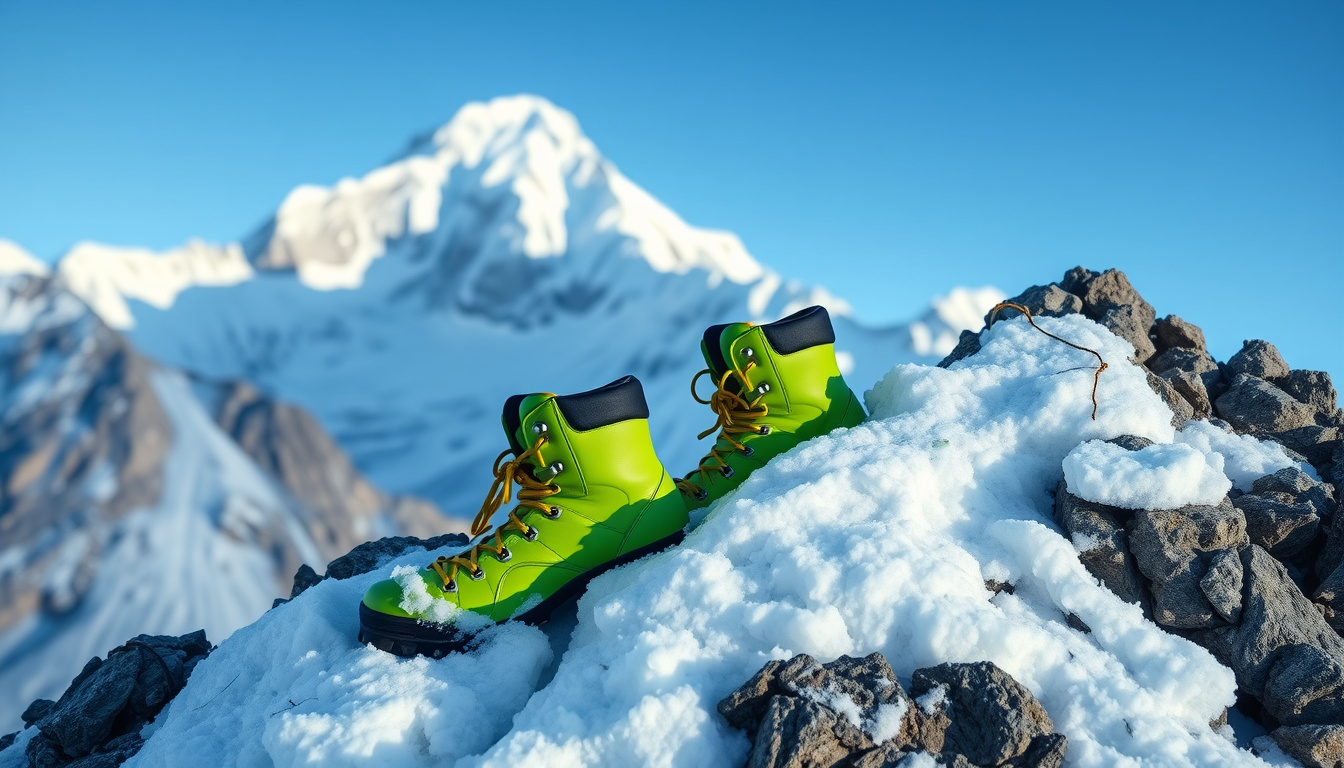

Few images from Mount Everest are as haunting as the body known as Green Boots, curled in a limestone alcove at 8,500 meters. It’s a grim landmark that thousands of climbers pass each season, but it’s also a story of disputed identity, difficult recovery, and the harsh realities of the death zone, where at least 346 people have died since the 1920s and an estimated 200 bodies remain.
Estimated bodies remaining on Everest: around 200 ·
Total deaths on Everest (as of 2024): at least 346 ·
Most famous body: Green Boots (Tsewang Paljor) ·
Highest body: Francys Arsentiev (Sleeping Beauty) ·
Body recovery cost: up to $80,000 per body
Quick snapshot
- Green Boots is believed to be Tsewang Paljor (Wikipedia (encyclopedic reference))
- David Sharp died near the summit in 2006 (Wikipedia (biographical profile))
- Francys Arsentiev (Sleeping Beauty) died in 1998 (Wikipedia (biographical entry))
- George Mallory’s body was discovered in 1999 (Wikipedia (mountaineer profile))
- Whether Mallory and Irvine reached the summit before dying
- Exact identity of Green Boots (could be Dorje Morup)
- How many undiscovered bodies remain on the mountain
- Total death count varies between sources (some report over 200, others over 346)
- 1924: Mallory and Irvine disappear
- 1996: Eight climbers die in the Everest disaster
- 1999: Mallory’s body found
- 2024: Army recovers bodies of two climbers
- More recovery operations as climbing seasons increase
- Ongoing debate over body removal ethics and cost
- Green Boots reportedly still visible in 2024
A clear summary of the most important figures provides context for the stories below.
| Fact | Detail |
|---|---|
| Total deaths on Everest | 346+ (as of 2024) |
| Bodies still on mountain | around 200 |
| Most famous body | Green Boots (Tsewang Paljor) |
| Highest body | Francys Arsentiev (Sleeping Beauty) |
| Oldest body found | George Mallory (died 1924, found 1999) |
Who was the famous body found on Everest?
Who is the most famous body on Mount Everest?
- The body known as Green Boots is widely considered the most famous corpse on the mountain. According to Wikipedia (encyclopedic reference), the nickname comes from the bright green boots the climber was wearing. It is believed to be Tsewang Paljor, an Indian member of the Indo-Tibetan Border Police who died during the 1996 Everest disaster.
- A Nepal trekking article (Namaste Nepal Trekking, trekking operator) also identifies the body as Tsewang Paljor and places his death in the 1996 tragedy.
- However, Mission Eco Trek (travel guide) notes that the exact identity is disputed; some sources suggest it could be Dorje Morup, another climber from the same expedition.
What is the story of Green Boots on Everest?
- The body lay for years in a limestone alcove at around 8,500 meters on the north side route, serving as a grim landmark for climbers. Wikipedia states it remained there until it was moved in 2014. Later reports say Green Boots reappeared in 2017 and is still present as of 2024.
- Nearly every climber ascending from the north side encounters the location, according to Mission Eco Trek.
Green Boots is both a landmark and a warning: the body that guides climbers up also reminds them that the mountain never stops taking. No other site on Earth doubles as a route marker and a mass grave.
The implication: every climber who passes Green Boots must decide whether the summit is worth the risk that the mountain will keep another body.
What were David Sharp’s last words?
Why did David Sharp refuse oxygen?
- In 2006, British climber David Sharp died near the summit of Everest. Fellow climbers reported his last words as “I just want to sleep.” According to accounts compiled by Wikipedia (biographical profile), he was suffering from severe hypoxia and exhaustion, which impaired his judgment and led him to refuse oxygen.
- Sharp’s death sparked controversy because many climbers passed him without providing effective assistance. The incident highlighted ethical dilemmas in the death zone.
David Sharp’s case shows how oxygen deprivation in the death zone can rob a climber of the ability to recognize mortal danger. The decision to “refuse oxygen” is often a symptom, not a choice.
What this means: the line between survival and fatal error becomes invisible above 8,000 meters.
How long will the bodies on Everest last?
Why haven’t the dead bodies on Everest been removed?
- Bodies can last for decades because of the freezing temperatures and dry air. Some remains have been preserved for over 100 years — George Mallory’s body, discovered in 1999, showed remarkable preservation after 75 years on the mountain.
- Removal is extremely dangerous and expensive. As reported by Mission Eco Trek (travel information site), recovery operations cost up to $80,000 per body and often involve significant risk to the recovery team.
- Many bodies lie in crevasses or steep terrain where retrieval would be life-threatening. The Chinese Mountaineering Association has conducted some cleanup efforts, but most remains are left in place.
The catch: each recovery operation is a gamble with human lives for the sake of closure.
Why can’t you boil an egg at the top of Mount Everest?
What is vapour pressure and why does it matter on Everest?
- At high altitudes, atmospheric pressure is lower, which causes water to boil at a lower temperature. On the Everest summit, water boils at about 68°C (154°F). Since eggs require 100°C to cook properly, a soft-boiled egg is impossible. The science is explained by the physics of vapour pressure.
- The same principle affects climbers’ ability to cook and stay hydrated. Boiling water for drink is possible, but the lower boiling point means food cooks much slower or not at all.
The pattern: the same thin air that starves climbers of oxygen also makes simple tasks like cooking impossible.
Why do planes not fly over Everest?
Can you fly to the top of Mount Everest?
- Commercial airlines avoid flying directly over Everest due to severe turbulence and the lack of emergency landing options. According to Wikipedia (aviation section), aircraft capable of flying that high would have minimal glide range, making a forced landing impossible.
- Helicopters can land on the summit only with special permits and lightweight modifications. No scheduled flights operate over the peak.
The implication: even the sky above Everest is hostile to human ambition.
Is Sleeping Beauty body still on Everest?
Who was Francys Arsentiev?
- Francys Arsentiev, known as “Sleeping Beauty,” was the first American woman to summit Everest without supplemental oxygen. She died on the descent in 1998. According to Wikipedia (biographical entry), her body remained at a high elevation for years, visible to climbing parties.
- In 2007, a team moved her body to a less visible location out of respect, but it remains on the mountain. Reports indicate she is still present near the summit area.
Moving a body on Everest costs tens of thousands of dollars and risks the lives of the recovery team. For every body recovered, the families get closure; for every body left behind, the mountain keeps a story.
What this means: the decision to retrieve or leave a body is a moral calculation with no correct answer.
Timeline: Notable deaths and discoveries on Everest
- 1924: George Mallory and Andrew Irvine disappear near the summit. Mallory’s body found in 1999.
- 1996: Eight climbers die in the 1996 Everest disaster, including Tsewang Paljor (Green Boots).
- 1998: Francys Arsentiev dies, becomes “Sleeping Beauty”.
- 1999: Mallory’s body discovered by a search expedition.
- 2006: David Sharp dies near the summit.
- 2007: Sleeping Beauty’s body moved but remains on the mountain.
- 2024: Army recovers bodies of two climbers (Milan Sedlacek, Roland Yearwood).
The pattern: each decade adds new names to Everest’s frozen ledger.
Confirmed facts
- Green Boots is likely Tsewang Paljor (Wikipedia)
- David Sharp died in 2006 near the summit
- Francys Arsentiev died in 1998
- George Mallory’s body was found in 1999
What’s unclear
- Whether Mallory reached the summit before dying
- Exact identity of Green Boots (could be Dorje Morup)
- Total number of undiscovered bodies on the mountain
“I just want to sleep.” — David Sharp, as reported by fellow climbers (Wikipedia)
“Green Boots is the landmark that every north-side climber knows. You pass that body and you realize how close you are to the edge.” — Climber account from Himalayan Recreation (trekking blog)
The bodies on Everest are more than grim curiosities — they are permanent records of the mountain’s deadliest decisions. For future climbers, the lesson is clear: each body is a checkpoint that asks whether the next summit attempt is worth the risk. The mountain keeps its dead, and every new season adds another question to the trail.
youtube.com, himalayanrecreation.com, youtube.com, facebook.com
One of the most haunting landmarks on the mountain is the body known as Sleeping Beauty, left behind after Sleeping Beauty Francys Arsentiev perished near the summit in 1998.
Frequently asked questions
How many bodies are on Everest?
An estimated 200 bodies remain on the mountain, out of at least 346 total deaths as of 2024. Many are in the death zone above 8,000 meters.
Can bodies be removed from Everest?
Yes, but recovery is extremely dangerous and expensive — often costing up to $80,000 per body. Only a small fraction of remains have been recovered.
Why is Green Boots called that?
The nickname comes from the bright green mountaineering boots the body was wearing. The boots made the corpse easily identifiable.
What is the death zone on Everest?
The death zone is the area above roughly 8,000 meters where oxygen levels are too low to sustain human life. Climbers cannot remain there for long without supplementary oxygen.
How long does it take to die on Everest?
In the death zone, a climber without oxygen can lose consciousness in minutes and die within hours. The time varies based on weather, exhaustion, and altitude.
Are there any bodies visible on Everest routes?
Yes. Green Boots is the most famous visible body, located in a limestone alcove on the north side route. Other bodies are occasionally seen near the summit and along the Southeast Ridge.
What happens to bodies on Everest over time?
The freezing temperatures and low humidity mummify the bodies, preserving them for decades. Some have lasted over 100 years with minimal decomposition.
Related stories





Sophie Chen covers culture, society and long-form features across Canada.