If you’ve spent any time scrolling through political coverage lately, you’ve probably noticed something shifting in the faces of Trump’s inner circle. There is a specific, almost uniform look that keeps appearing — fuller lips, suspiciously smooth foreheads, jawlines that could cut glass. Plastic surgeons have given it a name: Mar-a-Lago face. What exactly defines this look, why did it spread so fast, and what happens when the trend eventually fades? Here’s what we know.
Key Features: Lip augmentation, Botox, jaw contouring ·
Common Procedures: Shots and injectables ·
Associated Look: Full lips, high cheekbones, strong jaw ·
Cultural Context: MAGA aesthetic loyalty test
Quick snapshot
- Exact costs vary widely by region and provider
- Long-term permanence without controlled studies
- Volume of individual procedures performed
- Whether celebrity transformations are fully confirmed
- 2006: Dana Perino adopts glam style (Bored Panda)
- 2011–2018: Kimberly Guilfoyle facelift period (Bored Panda)
- January 2025: D.C. surgeons report surge (Axios)
- Late 2025: Signs of trend fatigue (The Week)
- Search interest reportedly slowing by late 2025
- Washington shifting back to subtle aesthetics
- Regular maintenance required to maintain look
- Filler blindness risks from excessive procedures
Key attributes of Mar-a-Lago face range from defining interventions to trend status and regional variations.
| Attribute | Details |
|---|---|
| Defining Interventions | Lip augmentation, Botox, jaw contouring |
| Visual Markers | Full lips, prominent cheekbones, bright teeth |
| Cultural Tie | American conservative beauty trend |
| Minimum Initial Cost | $90,000 (The Week) |
| Monthly Upkeep | Hundreds of dollars |
| Primary Regions | Florida, Washington D.C. |
| Trend Status | Reportedly peaking in late 2025 |
What is the Mar-a-Lago face syndrome?
Mar-a-Lago face refers to a recognizable combination of facial features that has become shorthand for a specific aesthetic within conservative political circles. The look centers on high, firm overfilled cheeks, taut skin, an elevated hairline, full lips, well-defined eyebrows, wide almond-shaped eyes, a strong jawline, a narrow-bridged nose, and very white teeth. It is achieved through surgical procedures and injectables such as veneers, Botox, facelifts, eyelid surgery, laser treatments, and fillers. The result is an intentionally dramatic appearance that departs sharply from the understated aesthetic that traditionally dominated Washington political life.
Characteristics
The defining features of Mar-a-Lago face extend beyond individual procedures. Practitioners and observers describe a constellation of elements: overfilled lips that draw immediate attention, unnaturally smoothed skin free of expression lines, dramatically arched eyebrows, and the kind of jawline definition that typically requires surgical intervention or significant filler work. High-glam makeup completes the picture — dark smoky eyes, false lashes, and spray tans that create a uniform, almost theatrical look.
The Mar-a-Lago face is not subtle by design. It is a deliberately amplified version of several cosmetic procedures performed simultaneously, creating a look that reads as cohesive even though it requires constant upkeep.
Procedures involved
According to reporting by The Week, achieving Mar-a-Lago face typically involves multiple surgical procedures and injectable treatments. Facelifts provide the lifted, taut appearance around the jaw and neck. Botox smooths the forehead and minimizes expression lines. Fillers restore volume to cheeks and lips, often in quantities that exceed standard cosmetic usage. Veneers address the requirement for bright, uniform teeth. Florida doctors near Mar-a-Lago advertise a full menu of services including brow lifts, eyelid lifts, nose jobs, fat transfers, neuromodulators, microneedling, chemical peels, and laser treatments.
Why is it called Mar a Lago face?
The name itself is a geographic and cultural marker. Mar-a-Lago refers to Donald Trump’s private club and resort in Palm Beach, Florida. The aesthetic became associated with Trump’s inner circle after observers noticed a remarkable similarity in the facial features of women connected to his political world. Ivanka Trump, whose look has been extensively analyzed by dermatologists and plastic surgeons, became the unofficial template for the style.
Association with Mar-a-Lago resort
Florida doctors near Mar-a-Lago have openly advertised Mar-a-Lago face services, targeting both local residents and visitors from Trump’s political orbit. Plastic surgeons in the area offer bundled procedure packages designed to replicate the signature look. The geographic association gives the trend its name and reinforces its identity as something tied to a specific community rather than generic cosmetic preferences. As Axios reported, surgeons in the nation’s capital began seeing a surge in requests starting in January 2025, when Trump insiders and Florida transplants brought their existing work and new requests to Washington.
Political context
Beyond the cosmetic procedures themselves, observers have noted the cultural and political signaling embedded in the look. Laurie Essig, a professor of gender, sexuality, and feminist studies at Middlebury College, has described the Mar-a-Lago face as a form of communication within Trump’s movement. According to Women.com, Essig stated that “the women of the Trump movement, their facial disfigurations signal loyalty and a willingness to submit.” The trend reportedly also reflects a desire to please Trump, who has been noted to prefer attractive subordinates. Whether this interpretation holds universal validity or represents a particular analytical lens, it reflects a broader conversation about identity performance within political communities.
Beauty standards have always carried social meaning. Mar-a-Lago face stands out because it transforms a personal cosmetic choice into a public statement — one that observers across the political spectrum can read, even if they disagree about what it means.
What celebrities have a Mar-a-Lago face?
Several figures associated with Trump’s political world have been cited as examples of the Mar-a-Lago face aesthetic. While none of these individuals have confirmed their procedures publicly, plastic surgeons and dermatologists have offered professional analyses based on photographic evidence and observable changes over time.
Ivanka Trump
Ivanka Trump is consistently cited as the template for the Mar-a-Lago look. The Week reports that Dr. Matthew J. Nykiel described Mar-a-Lago face features as modeled after Ivanka Trump. Analysis from Bored Panda notes that Ivanka’s fuller lips, pronounced cheekbones, and wrinkle-free visage have become the reference point for the trend. Dr. Raffi Hovsepian, a board-certified plastic surgeon, has noted that softness around Ivanka Trump’s jawline might result from fillers. Her appearance represents the ideal within this particular beauty framework, and other figures in the movement have reportedly sought to replicate it.
Melania Trump
Melania Trump has maintained a carefully controlled public image throughout her time in the political spotlight. Observers of the Mar-a-Lago face phenomenon have noted her refined features and consistent skincare approach, though she has not been specifically targeted as an adopter of the more dramatic Mar-a-Lago aesthetic. The distinction matters: Mar-a-Lago face is defined by its overt enhancements, and Melania’s approach represents a different strategy within the broader landscape of political presentation.
Other figures
Kari Lake may have undergone facelift and upper blepharoplasty, according to plastic surgeon analysis documented by Bored Panda. Kimberly Guilfoyle likely had a facelift during her time on Fox News’s The Five program from 2011 to 2018, as stated by Dr. Dennis Schimpf. Kristi Noem has adopted voluminous hair, dramatic eye makeup, false lashes, arched eyebrows, and procedures like Botox, lip fillers, and threads per Dr. Jimmy Sung’s analysis. Lara Trump had fillers in cheeks and lips per Dr. Jennifer Armstrong. Laura Loomer confirmed rhinoplasty via Instagram in 2017, and analysis suggests she has since undergone facelift and lip fillers. Dana Perino embraced a glam style in 2006 when joining Fox News, with rumored rhinoplasty around that time.
Actresses reportedly aligned with the aesthetic include Sydney Sweeney, who has been cited in social media discussions comparing her look to the Mar-a-Lago template. The association appears largely driven by observation rather than confirmed adoption of the specific combination of procedures.
Most of these analyses come from plastic surgeons reviewing photographs — not from confirmed statements by the individuals themselves. The speculative nature of celebrity procedure tracking means the documented evidence has important gaps.
How much does it cost to get Mar-a-Lago face?
Achieving a Mar-a-Lago face is not a budget-friendly endeavor. According to The Week, initial procedures can cost upwards of $90,000, with monthly upkeep costing hundreds of dollars. This figure represents a floor, not a ceiling, since the specific procedures involved can vary significantly in price depending on the surgeon, geographic location, and number of interventions performed.
Breakdown of procedures
A full Mar-a-Lago face package typically includes multiple interventions. Facelifts, particularly deep plane facelifts, can run $15,000 to $100,000 depending on complexity and surgeon reputation. Fillers for lips and cheeks cost between $500 and $2,000 per syringe, and achieving the Mar-a-Lago look often requires multiple syringes. Botox treatments for forehead and crow’s feet cost $300 to $600 per session. Veneers for bright, uniform teeth add $1,000 to $3,000 per tooth, with full sets running $20,000 or more. Eyelid surgery ranges from $3,000 to $7,000. When these procedures are combined as a bundled approach, the total cost escalates rapidly.
Factors affecting price
Geographic location significantly influences cost. Surgeons in Florida near Mar-a-Lago and in Washington D.C. serving Trump’s political world often command premium pricing. Surgeon reputation and board certification also affect rates. The complexity of individual anatomy determines how much work is required, and the quality of materials — premium fillers, advanced laser equipment, high-grade veneers — adds to the final bill. Maintenance costs accumulate over time: fillers dissolve within months, requiring repeat visits; Botox needs top-ups every three to four months; facelifts, while more permanent, still face aging and may require revision.
Is Mar-a-Lago face permanent?
The short answer is no. Without regular maintenance, the features associated with Mar-a-Lago face disappear relatively quickly. According to The Week, the look requires continuous upkeep, and the moment that maintenance stops, the results begin to fade. Fillers dissolve within six to twelve months. Botox wears off within three to four months. Even surgical results from facelifts, while longer-lasting, face the ongoing reality of aging tissue.
Effects over time
Understanding what happens over years requires looking at how each component ages. Fillers, once absorbed by the body, leave the treated area at or near its original state, though repeated filler use can stretch tissue over time. Botox prevents muscle movement that causes expression lines; when treatment stops, lines return. Surgical facelifts address sagging and loose skin, but the aging process continues regardless. The cumulative effect of stopping all maintenance is a return toward natural appearance, though some structural changes from repeated procedures may persist.
Future facelifts
For those who have undergone Mar-a-Lago face procedures, revision surgery becomes a consideration as they age. Deep plane facelifts, which reposition deeper facial structures rather than simply tightening skin, tend to last longer than traditional approaches. However, no facelift is permanent. Patients who begin these procedures in their thirties or forties may face multiple surgeries over their lifetime. Dr. Troy Pittman, a Washington D.C. plastic surgeon, has noted that the city traditionally favors understated procedures — a philosophy that contrasts sharply with the bold Mar-a-Lago aesthetic and suggests a coming correction as preferences shift.
The implication is that Mar-a-Lago face wearers who age into their fifties and sixties may find themselves navigating diminishing returns: revision surgeries cost more, carry higher risk, and must compete against a body that continues to change beneath the work.
The trend may be approaching a tipping point. Beauty trends historically burn fast due to algorithm-driven social media cycles. Washington D.C. surgeons are already reporting a shift toward more conservative requests from political newcomers who want work done but prefer subtlety — a departure from the full Mar-a-Lago treatment that dominated earlier in 2025.
Related reading: menopause and aging signs · cosmetic procedure risks
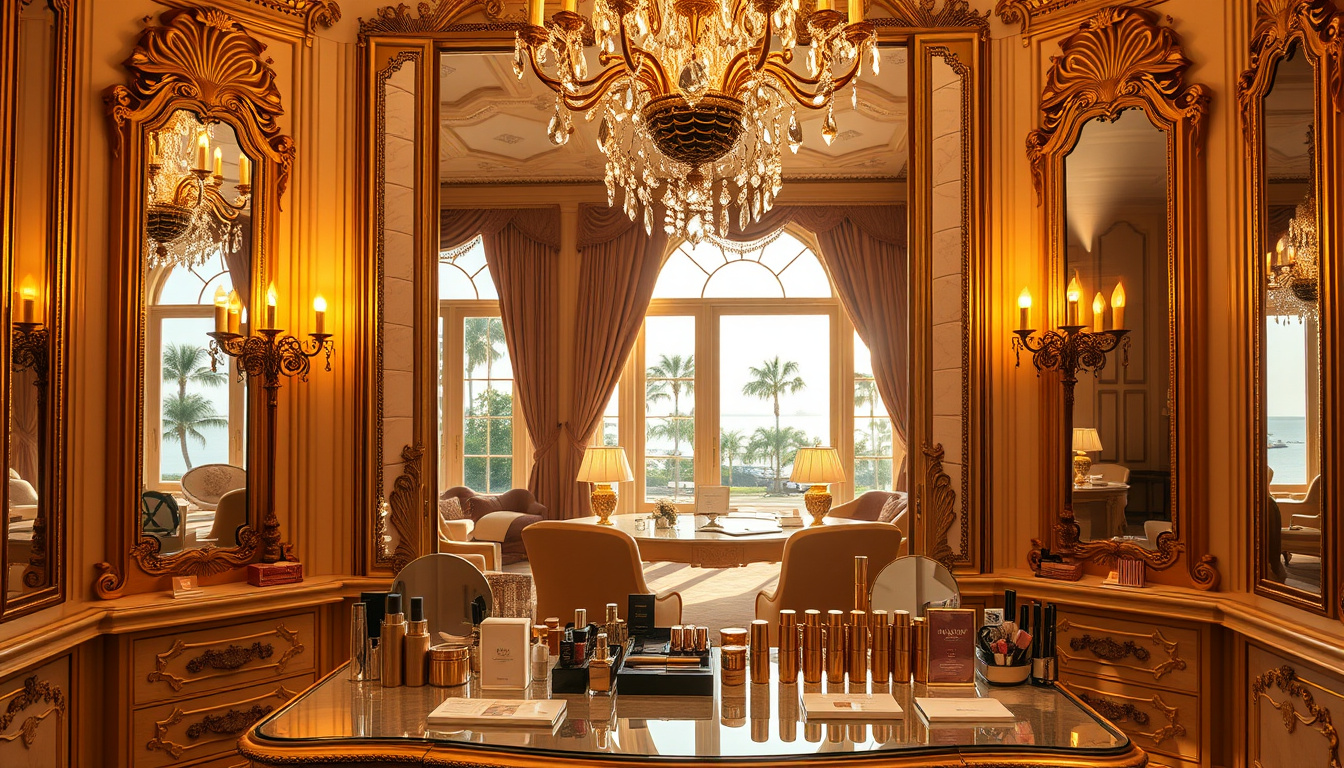
The polished ‘Mar-a-Lago face’ aesthetic thrives among celebrities like Ivanka Trump who frequent Trumps Mar-a-Lago club in sunny Palm Beach.
Frequently asked questions
What procedures are used for Mar-a-Lago face?
The Mar-a-Lago face is achieved through a combination of surgical and injectable treatments including facelifts, jaw contouring, lip augmentation with fillers, Botox for forehead lines, eyelid surgery, laser treatments, and veneers for teeth whitening and alignment.
How does Mar-a-Lago face differ from other trends?
Unlike beauty trends that emerge organically from celebrity influence, Mar-a-Lago face carries explicit cultural and political signaling. It is not just an aesthetic preference but a statement tied to a specific political movement. Additionally, its overt, dramatic character contrasts with trends that favor natural or understated enhancement.
What is the MAGA aesthetic connection?
The MAGA aesthetic connection refers to the association between the Mar-a-Lago face look and supporters of Donald Trump’s political movement. The style became identified with Trump’s inner circle, with Ivanka Trump serving as the reference template. It signals loyalty to the movement, though the extent to which this signaling is intentional versus perceived by observers remains debated.
Are there before and after examples?
Various publications have documented photographic comparisons of individuals before and after suspected procedures. Bored Panda has published analyses of figures including Ivanka Trump, Kimberly Guilfoyle, Kristi Noem, and Laura Loomer. However, most of these analyses are speculative based on photographic evidence, as the individuals themselves have not confirmed their procedures publicly.
Why the criticism of Mar-a-Lago face?
Criticism focuses on several aspects: the artificial appearance often described as “plastic” or “overfilled”; the cultural implications of using cosmetic surgery to signal political loyalty; the health risks associated with excessive filler use; and the financial burden of maintaining the look. Some observers have characterized the trend as a “punchline” or relic as it has become more widely recognized.
Does makeup play a role in Mar-a-Lago face?
Makeup is an integral component of the Mar-a-Lago face aesthetic. High-glam application includes dark smoky eyes, dramatic eyeliner, false lashes, sculpted contouring, and often spray tans. The makeup amplifies the cosmetic procedures, creating a cohesive, camera-ready look that reads boldly in photographs and on video.
Is Mar-a-Lago face only for conservatives?
The term specifically describes an aesthetic associated with Trump’s political world, but the procedures involved are not politically exclusive. Lip augmentation, Botox, facelifts, and other interventions are performed across the political and social spectrum. What distinguishes Mar-a-Lago face is the combination, the intensity, and the cultural context in which it emerged.
“The women of the Trump movement, their facial disfigurations signal loyalty and a willingness to submit.”
— Laurie Essig, Professor of Gender, Sexuality, and Feminist Studies, Middlebury College (Women.com)
“Filler blindness” from excessive product use leads to loss of anatomical normalcy, where patients can no longer see what a normal face actually looks like.
— Anita Karni, D.C. Plastic Surgeon (Axios)
The Mar-a-Lago face phenomenon tells a story about how beauty standards become entangled with political identity. For those considering cosmetic procedures, the financial and health implications are significant — $90,000 initial costs plus hundreds monthly in maintenance, combined with documented risks from excessive filler use. For political observers, the trend offers a window into how personal presentation decisions become public signals. Whether the look endures or fades into cultural memory depends on whether its wearers continue to find value in what it communicates.
Related stories




Rebecca Thompson is Managing Editor at Civic Maple, overseeing daily newsroom workflow, commissioning and headline review.