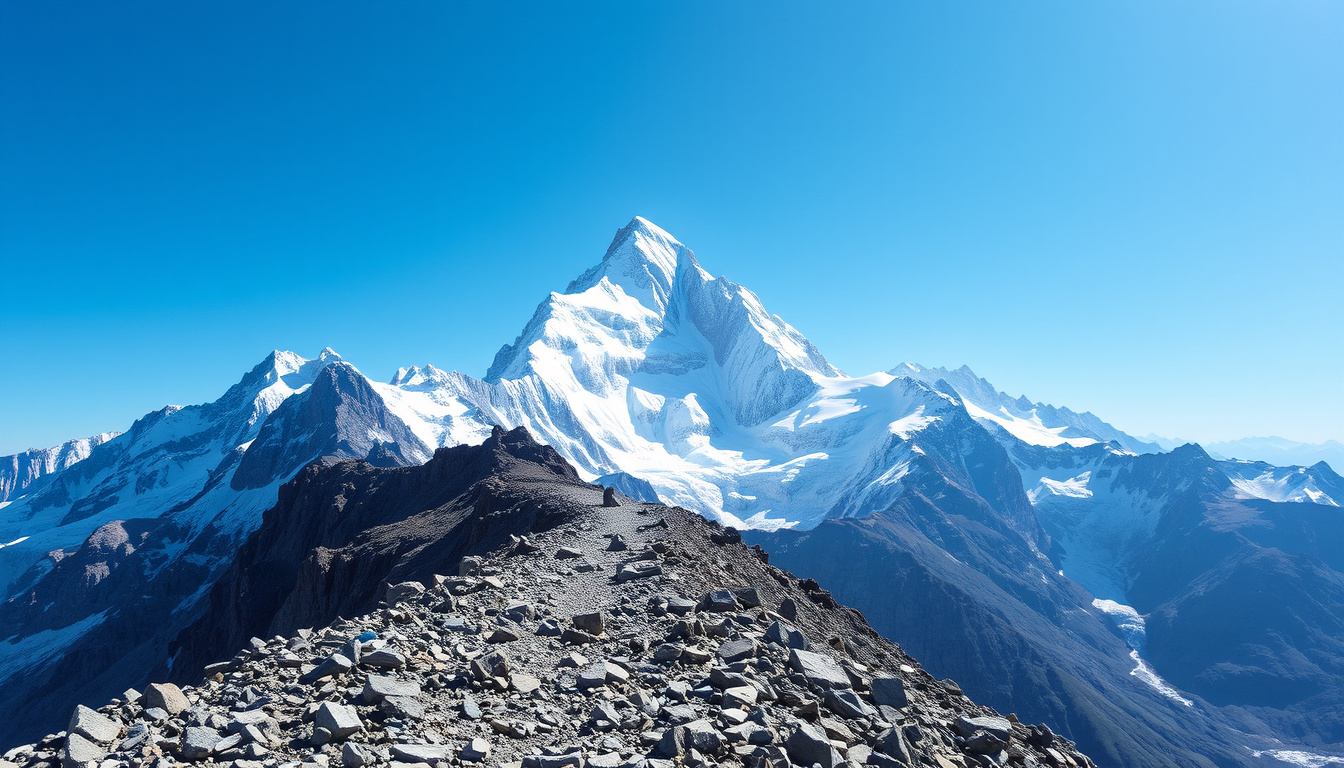
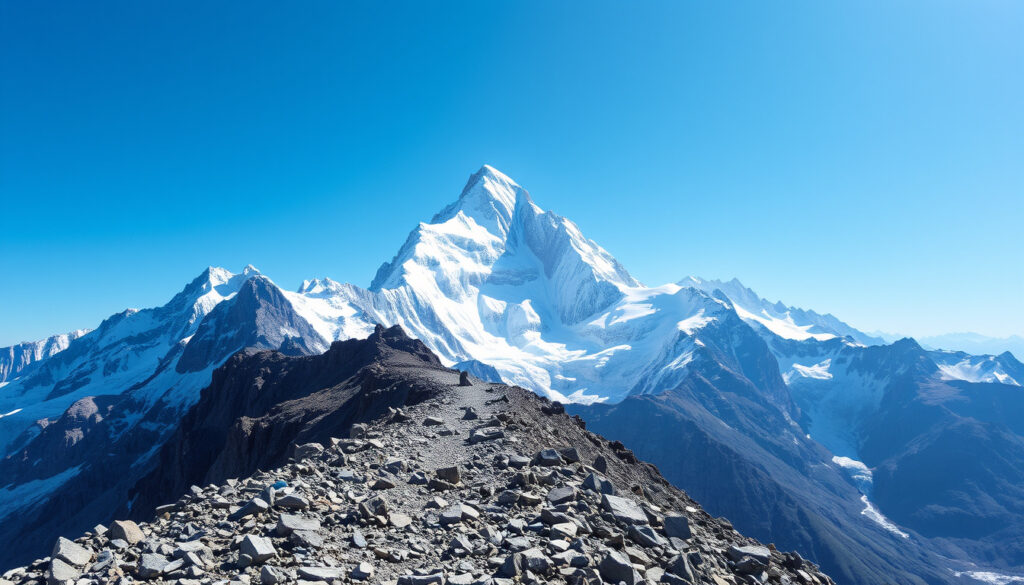
Few mountains in Europe carry as much weight as Mont Blanc. It shows up on postcards, in bucket lists, and in the uneasy dreams of novice climbers. But behind the postcard image lies a complex reality: a summit that straddles two countries, demands serious preparation, and carries a reputation that’s both majestic and merciless.
Height: 4,809 m (15,777 ft) ·
First Ascent: 8 August 1786 ·
Location: France / Italy border ·
Closest City: Chamonix, France ·
Typical Climb Duration: 2–3 days
Quick snapshot
- Highest peak in the Alps and Western Europe (Macs Adventure (specialist trekking operator))
- Summit lies on the French side of the border with Italy (Wikipedia (crowdsourced encyclopedia))
- First ascent in 1786 by Jacques Balmat and Dr. Michel Paccard (Wikipedia)
- Exact annual fatality count is not reliably reported worldwide (Wikipedia)
- First recorded ascent: 8 August 1786 (Wikipedia)
- Growing interest in comparing Mont Blanc climbs with other popular peaks such as Mount Kilimanjaro
The pattern at a glance: Mont Blanc is a complex system of geography, cost, and risk, not just a single summit.
| Attribute | Value |
|---|---|
| Elevation | 4,809 m (15,777 ft) |
| Country | France (summit) / Italy (border) |
| First Ascent | 1786 by Jacques Balmat and Dr. Michel Paccard |
| Known For | Highest mountain in the Alps; iconic mountaineering challenge |
| Nickname | Cursed Mountain (due to high number of fatalities) |
Is Mont Blanc in France or Switzerland?
Where exactly is Mont Blanc located?
Mont Blanc sits on the border between France and Italy, not Switzerland. The summit itself is within French territory. The massif extends into both countries, and the town of Chamonix, France, is the primary base for ascents, while Courmayeur, Italy, lies on the opposite side (Wikipedia (crowdsourced encyclopedia)).
Which European countries share Mont Blanc?
Only France and Italy share the mountain. Switzerland is nearby but does not claim any part of the summit. The famous Mont Blanc tunnel connects France and Italy, not Switzerland (Macs Adventure (specialist trekking operator)).
The pattern: the most common misconception is that the mountain belongs to Switzerland. In reality, the border runs along the ridge, and the summit lies entirely in France.
For any climber planning a route: the French and Italian sides offer different approaches, so choosing your base determines your logistics.
What exactly is Mont Blanc?
How tall is Mont Blanc?
Mont Blanc’s elevation is commonly cited as 4,809 m (15,777 ft). Some measurements report 4,807.3 m, but the official figure used by most guidebooks and the Macs Adventure (specialist trekking operator) is 4,809 m.
Mont Blanc mountain overview
It is the highest peak in the Alps and the highest in Western Europe. The massif also includes the Aiguille du Midi (3,842 m), accessible by cable car from Chamonix (Kelly Prince Writes (travel blog)).
Five key specs, one pattern: the mountain is a complex system of glaciers, ridges, and weather patterns that make it a serious alpine environment.
A quick editorial framing: Mont Blanc is not just a peak — it’s a weather system, a glacier system, and a commercial system all at once.
| Specification | Value |
|---|---|
| Height | 4,809 m (15,777 ft) |
| First Ascent | 1786 |
| Location | France / Italy border |
| Closest City | Chamonix, France |
| Typical Climb Duration | 2–3 days |
| Guide Requirement | Mandatory for most commercial climbs |
| Highest Point on Tour du Mont Blanc | Grand Col Ferret (2,537 m) |
The catch: the mountain’s height changes slightly with snow accumulation, but for planning purposes, 4,809 m is the standard.
Which city is closest to Mont Blanc?
Chamonix-Mont-Blanc: the gateway
Chamonix, France, is the primary base town. It sits at the foot of the mountain and offers direct access to the Aiguille du Midi cable car, which takes visitors to 3,842 m in minutes (Kelly Prince Writes (travel blog)).
What is the Chamonix valley?
The Chamonix valley is a popular destination for skiing, hiking, and mountaineering. On the Italian side, Courmayeur serves as the counterpart. The Tour du Mont Blanc, a ~170 km circuit, passes through both countries (Bookatrekking.com (trekking specialist)).
Why this matters: the choice of base town affects logistics, cost, and the route you take up the mountain.
Is Mont Blanc a difficult climb?
Can a beginner do Mont Blanc?
Mont Blanc is not the most technically difficult alpine peak, but it requires good fitness, familiarity with crampons and ice axes, and the ability to handle altitude and weather. The Chamonix Mont Blanc Guides (IFMGA-accredited guide service) state that previous alpine climbing experience or prior use of an ice axe and crampons is required for their 3‑day course. A 2:1 client-to-guide ratio is standard for the program.
What’s harder, Kilimanjaro or Mont Blanc?
Mont Blanc is generally considered more technical than Kilimanjaro. Kilimanjaro is a high-altitude trek on a non-technical route, while Mont Blanc involves glacier travel, crevasses, and steep snow. The table below compares the two.
One comparison, one pattern: both are iconic, but the skill set required is different.
| Factor | Mont Blanc | Kilimanjaro |
|---|---|---|
| Elevation | 4,809 m | 5,895 m |
| Technical difficulty | High (glacier, crevasses, ice axe) | Low (non-technical trek) |
| Guide requirement | Mandatory for most commercial climbs | Mandatory (park regulations) |
| Typical cost (guided) | €1,500–€4,000 | $2,000–$6,000 |
| Duration | 2–3 days | 5–9 days |
| Acclimatization challenge | Moderate (shorter climb) | High (longer exposure) |
The trade-off: Mont Blanc is shorter but more technical; Kilimanjaro is higher but less demanding on technique. Which one is “harder” depends on your strengths.
A beginner without alpine experience should not attempt Mont Blanc without a guide and proper training. The mountain’s danger comes from its combination of altitude, weather, and objective hazards, not just its grade.
The implication: for most climbers, Mont Blanc is a serious step up from a walking holiday and requires dedicated preparation.
Why is Mont Blanc so expensive?
Factors driving the cost
Costs include guides (compulsory for most), hut fees, equipment rental, permits, and transportation. Guided climbs can range from €900 to €3,500 depending on group size, duration, and included services (Explore-Share (mountaineering booking platform)).
What does a typical Mont Blanc climb cost?
One 3‑day guided ascent from Chamonix Mont Blanc Guides (IFMGA-accredited guide service) starts at about €2,200 per person, with a private 1:1 version adding €1,240 extra. The Tour du Mont Blanc trek costs around €1,700 for a self‑guided trip and up to $3,795 for a guided 10‑day version (TMB Guide (specialist trekking resource)).
The pattern: the mountain’s expense is driven by the need for professional guides, hut accommodations, and the short climbing season.
For a budget-conscious climber, the total cost of a Mont Blanc ascent can rival a climb of Kilimanjaro, despite the shorter duration.
Why is Mont Blanc called the cursed mountain?
History of the nickname
The nickname “Cursed Mountain” stems from its high fatality rate and dangerous conditions. It is one of the deadliest mountains in the world per climber, with avalanches, falls, and crevasses claiming lives each year (Wikipedia (crowdsourced encyclopedia)).
Avalanches and fatalities on Mont Blanc
While exact numbers are hard to verify due to incomplete reporting, the mountain’s reputation is well‑earned. The combination of steep terrain, unpredictable weather, and high traffic makes it a persistent risk.
The catch: the nickname is not just folklore — it’s a reflection of real danger that every climber must respect.
How to Prepare for a Mont Blanc Climb
Four steps, one theme: preparation is not optional.
- Build cardiovascular fitness and leg strength. You’ll be climbing for 6–8 hours a day at altitude. A baseline of 10 km hikes with 1,000 m elevation gain is recommended.
- Learn to use crampons and an ice axe. The Chamonix Mont Blanc Guides (IFMGA-accredited guide service) require previous experience with these tools for their 3‑day course.
- Choose a reputable guide service. A guide is mandatory for most commercial climbs. Look for IFMGA‑certified guides.
- Acclimatize properly. Spend a day or two at altitude in Chamonix or take a cable car to the Aiguille du Midi to test your response.
The implication: skipping any of these steps increases the risk of failure or injury.
Quotes from the Experts
“The first ascent of Mont Blanc in 1786 by Balmat and Paccard marked the beginning of modern mountaineering. It was a feat of courage and determination that still inspires today.”
— Mountaineering historian, speaking on the first ascent
“For a beginner, Mont Blanc is a serious undertaking. You need to be fit, comfortable with altitude, and willing to trust your guide. It’s not a walk in the park.”
— IFMGA mountain guide, on the difficulty for beginners
The editorial angle: the mountain rewards respect and punishes overconfidence.
Summary
Mont Blanc is a geographic and cultural icon that demands serious preparation, a clear budget, and a realistic understanding of its dangers. For a climber coming from a non‑alpine background, the choice is clear: either invest in professional training and a guide, or choose a less technical peak like Mount Logan as a stepping stone. The mountain will still be there next season.
iantaylortrekking.com, reddit.com, climbing-kilimanjaro.com, toursdumontblanc.com, reddit.com
For those seeking a more comprehensive breakdown of routes and logistics, a detailed climbing guide offers additional practical advice.
Frequently asked questions
How long does it take to climb Mont Blanc?
Most guided ascents take 2–3 days, including acclimatization and hut stays.
What is the best time of year to climb Mont Blanc?
June to September is the typical climbing season, with July and August being the most popular.
How many people climb Mont Blanc each year?
Estimates suggest around 20,000–30,000 attempts annually, with roughly 5,000–10,000 reaching the summit.
Is climbing Mont Blanc dangerous?
Yes, it is one of the deadliest mountains per climber due to avalanches, falls, and crevasses. Proper preparation reduces but does not eliminate risk.
Do I need a guide to climb Mont Blanc?
For most commercial climbs, a guide is legally required. Even experienced climbers often hire a guide for safety.
What kind of training is needed for Mont Blanc?
Good cardiovascular fitness, strength, and prior experience with crampons and ice axes are essential. Many climbers take a specific training course.
Related stories




Jonathan MacDonald is Editor-in-Chief at Civic Maple, overseeing editorial standards, publication decisions and corrections.