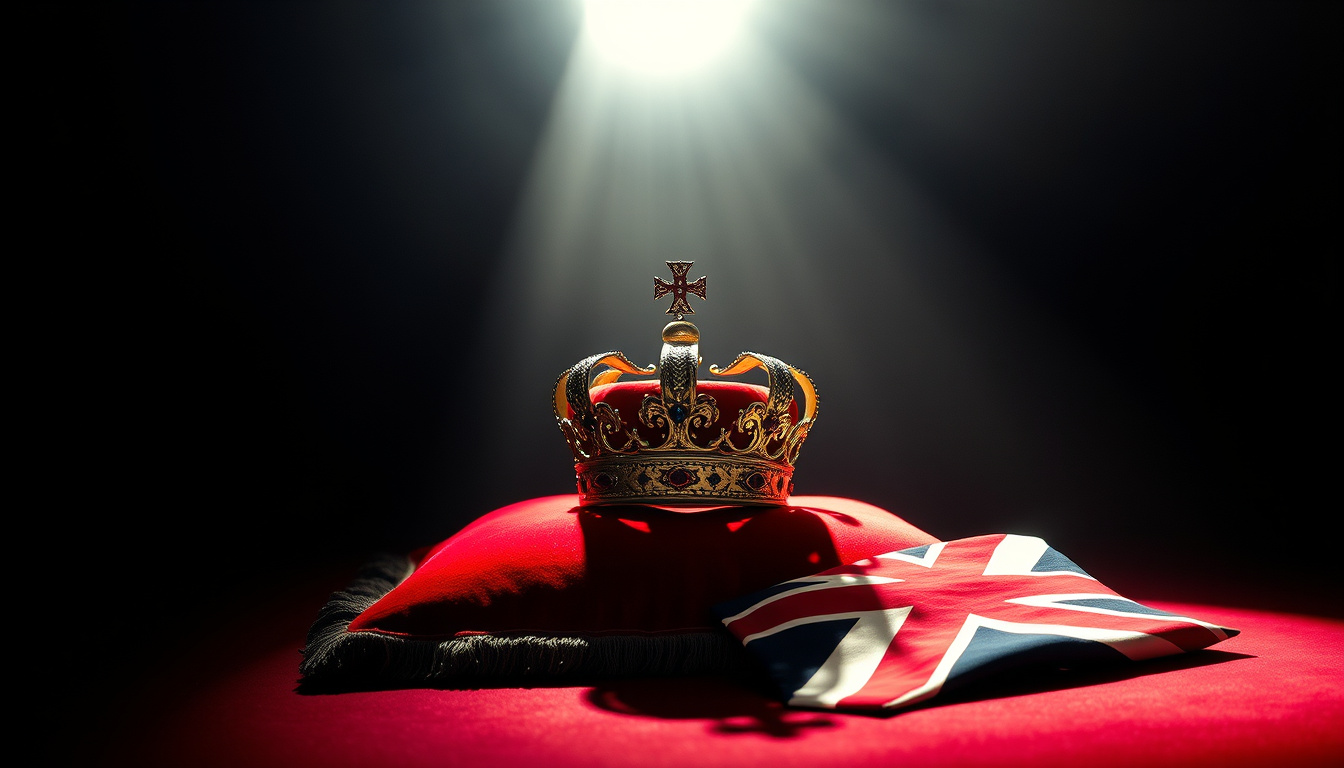
Few monarchs have been as reluctant to take the throne as George VI. Born as the second son of King George V, he was thrust into kingship after his brother Edward VIII abdicated in 1936, a role he never sought but carried with remarkable dignity.
Reign: 1936–1952 ·
Born: 14 December 1895 ·
Died: 6 February 1952 ·
Age at death: 56 years ·
Children: 2 (Elizabeth II and Margaret) ·
Spouse: Elizabeth Bowes-Lyon
Quick snapshot
- Born 14 December 1895 at Sandringham (Britannica)
- Died 6 February 1952 at Sandringham (HistoryExtra)
- Reigned 1936–1952 (Wikipedia)
- Exact nature of his relationship with Edward VIII after abdication (EBSCO Research Starters)
- Whether he fully accepted the burden of kingship or always felt burdened (HistoryExtra)
- Accession in December 1936 after abdication (Britannica)
- Lung cancer surgery in September 1951 (Biography.com)
- Death in February 1952, only months later (Britannica)
- His daughter Elizabeth II continued the modernisation of the monarchy (Encyclopedia.com)
- His legacy as a symbol of resilience endures in British culture (BBC News)
Seven key facts about George VI, from his birth name to the length of his reign:
| Fact | Value |
|---|---|
| Full name | Albert Frederick Arthur George |
| Born | 14 December 1895, Sandringham, Norfolk |
| Died | 6 February 1952, Sandringham, Norfolk |
| Spouse | Elizabeth Bowes-Lyon (married 1923) |
| Children | Elizabeth II, Princess Margaret |
| Reign | 11 December 1936 – 6 February 1952 |
| Coronation | 12 May 1937 |
Why was George VI so famous?
His role during World War II
- George VI remained in London during the Blitz and refused to leave the country, becoming a symbol of national unity (Britannica).
- He visited troops, factories, and bombed areas, often in military uniform, which boosted morale (Encyclopedia.com).
- His Christmas broadcasts, especially the 1939 speech quoting Minnie Haskins, resonated deeply with a nation at war (BBC News).
The implication: George VI used his personal vulnerability to forge a deeper connection with the public, turning a perceived weakness into a source of strength.
The abdication crisis and his unexpected accession
- His brother Edward VIII abdicated in December 1936 to marry Wallis Simpson, forcing George VI to take the throne (EBSCO Research Starters).
- He was crowned on 12 May 1937, a date originally planned for Edward VIII (Biography.com).
- The abdication crisis was a constitutional shock that tested the monarchy’s stability (Britannica).
The pattern: duty thrust upon him, not chosen. George VI’s entire reign was shaped by the shadow of his brother’s choice.
Overcoming his stammer
- George VI developed a stammer around age eight, exacerbated by a harsh upbringing and bullying (Biography.com).
- He worked with speech therapist Lionel Logue, whose techniques helped him deliver public addresses (BBC News).
- His struggle was widely publicised, especially after the 2010 film The King’s Speech (Stuttering Foundation).
The catch: the same shyness that made public speaking painful also made his eventual mastery of it all the more compelling.
A man who dreaded public speaking became the voice of a nation at war. His stammer, once a source of shame, became a symbol of perseverance.
What caused the death of King George VI?
Lung cancer diagnosis
- George VI was diagnosed with lung cancer in September 1951 and had his left lung removed (Biography.com).
- He had been a heavy smoker for decades, which contributed directly to the disease (Britannica).
- The surgery was performed by Sir Clement Price Thomas, a leading thoracic surgeon of the time (HistoryExtra).
Health decline and final days
- After the operation, George VI never fully recovered. He continued to suffer from arteriosclerosis and circulatory problems (Britannica).
- He died in his sleep on 6 February 1952 at Sandringham, aged 56 (HistoryExtra).
- The official cause of death was coronary thrombosis, though lung cancer had weakened him (Biography.com).
What this means: the combination of heavy smoking, war stress, and post-war duties created a perfect storm that shortened his life by years.
For the British public, the sudden death of their monarch at 56 was a shock that accelerated the transition to Elizabeth II’s reign, shaping the modern monarchy.
The pattern: his death came as a shock to a nation that had relied on his steady presence.
What disease did George VI have?
Arteriosclerosis and lung cancer
- George VI suffered from arteriosclerosis (hardening of the arteries) and peripheral vascular disease, diagnosed in 1949 (Britannica).
- In 1951, lung cancer was discovered during a routine check-up; he underwent a pneumonectomy (lung removal) (Biography.com).
- He also had Buerger’s disease (thromboangiitis obliterans), a condition linked to smoking (EBSCO Research Starters).
Surgical operations and recovery
- The lung surgery in September 1951 was extensive but the cancer had already spread (Britannica).
- Post-surgery, he was advised to rest completely, but he insisted on carrying out some state duties (HistoryExtra).
- His health never stabilised; he died just five months after the operation (Britannica).
The trade-off: the same smoking habit that helped him cope with stress also condemned him to a premature death.
Why did George VI change his name?
Birth name: Albert Frederick Arthur George
- His full name was Albert Frederick Arthur George; he was known as “Bertie” to his family (Wikipedia).
- He was named after his great-grandfather Prince Albert, but his father George V was the one who insisted on the royal name (Britannica).
Choosing George as his regnal name
- When he became king, he chose the regnal name George VI to honour his father and maintain continuity with the House of Windsor (Britannica).
- He decided not to use Albert because he felt that a king named Albert might be compared unfavourably to Queen Victoria’s consort (Encyclopedia.com).
- The choice signalled stability and tradition at a time of constitutional crisis (EBSCO Research Starters).
The implication: the name change was a strategic decision to project continuity and authority, not a personal whim.
Did George VI love Elizabeth?
Courtly romance and marriage
- George VI (then Prince Albert) married Elizabeth Bowes-Lyon on 26 April 1923 at Westminster Abbey (Britannica).
- He proposed three times before she accepted; she was initially hesitant about royal life (HistoryExtra).
- Their love letters, now in the Royal Archives, reveal genuine affection and mutual respect (Biography.com).
Devotion to his wife and family
- Throughout his reign, Elizabeth was his closest confidante and emotional support (Britannica).
- He was famously faithful to her, a contrast to the scandals of his brother Edward (EBSCO Research Starters).
- His daughters Elizabeth and Margaret grew up in a warm, close-knit family environment (HistoryExtra).
The pattern: the stability of his marriage provided the emotional anchor he needed to shoulder the crown.
For a man who inherited a throne in crisis, the unwavering support of his wife and daughters was the foundation of his resilience.
The catch: the same stability that anchored his personal life also fortified his public reign.
Timeline
- 14 December 1895: Born at Sandringham (Britannica)
- 1920: Created Duke of York (Britannica)
- 26 April 1923: Married Elizabeth Bowes-Lyon (Britannica)
- 11 December 1936: Became king after Edward VIII’s abdication (EBSCO Research Starters)
- 12 May 1937: Coronation at Westminster Abbey (Biography.com)
- 3 September 1939: Britain enters World War II (Britannica)
- 8 May 1945: VE Day – end of war in Europe (Britannica)
- September 1951: Lung cancer diagnosis and surgery (Biography.com)
- 6 February 1952: Died at Sandringham (Britannica)
The pattern: from a reluctant accession to a wartime icon, the timeline shows how external events forced a shy man into greatness.
What we know and what remains unclear
Confirmed facts
- His birth name was Albert Frederick Arthur George (Wikipedia)
- He died of lung cancer, complicated by coronary thrombosis (Britannica)
- He had a stammer from childhood (Stuttering Foundation)
- He was a heavy smoker (Britannica)
- He became king after Edward VIII’s abdication (EBSCO Research Starters)
What’s unclear
- Exact nature of his relationship with Edward VIII after the abdication (EBSCO Research Starters)
- Whether he fully accepted the role of king or always felt burdened (HistoryExtra)
- Exact cause of death: lung cancer versus coronary thrombosis (Biography.com)
- Whether his stammer was fully overcome (Stuttering Foundation)
- Precise timeline of his health decline in 1951–1952 (Biography.com)
The pattern: even with extensive documentation, some aspects of his inner life remain private.
Quotes and perspectives
“He was the most wonderful father and husband.”
— Queen Elizabeth, the Queen Mother (Biography.com)
“I said to the man who stood at the gate of the year, ‘Give me a light that I may tread safely into the unknown.'”
— George VI, 1939 Christmas broadcast (BBC News)
The catch: the same man who could barely speak in public found the words that rallied a nation.
Summary
George VI never wanted to be king, but he grew into the role when his country needed him most. His legacy is not one of grand ambition but of quiet endurance. For the British monarchy, the lesson is clear: the most reluctant leaders can become the most beloved, provided they meet the moment with authenticity and duty.
Frequently asked questions
How many children did George VI have?
Two: Elizabeth (later Queen Elizabeth II) and Princess Margaret (Britannica).
What was George VI’s role in World War II?
He remained in London during the Blitz, visited troops and factories, and delivered morale-boosting broadcasts (Britannica).
How did George VI’s stammer affect his reign?
It made public speaking a challenge, but his determination to overcome it became an inspiration to many (BBC News).
What was the abdication crisis?
In 1936, Edward VIII abdicated to marry Wallis Simpson, forcing George VI to take the throne (EBSCO Research Starters).
Did George VI have any siblings?
Yes, he had five siblings: Edward VIII, Mary, Henry, George, and John (Britannica).
What was George VI’s relationship with his daughter Elizabeth?
They were very close; he prepared her for queenship and she was devastated by his death (HistoryExtra).
How is George VI remembered today?
As a symbol of courage and duty, especially through films like The King’s Speech and his wartime legacy (BBC News).
Related stories





Jonathan MacDonald is Editor-in-Chief at Civic Maple, overseeing editorial standards, publication decisions and corrections.