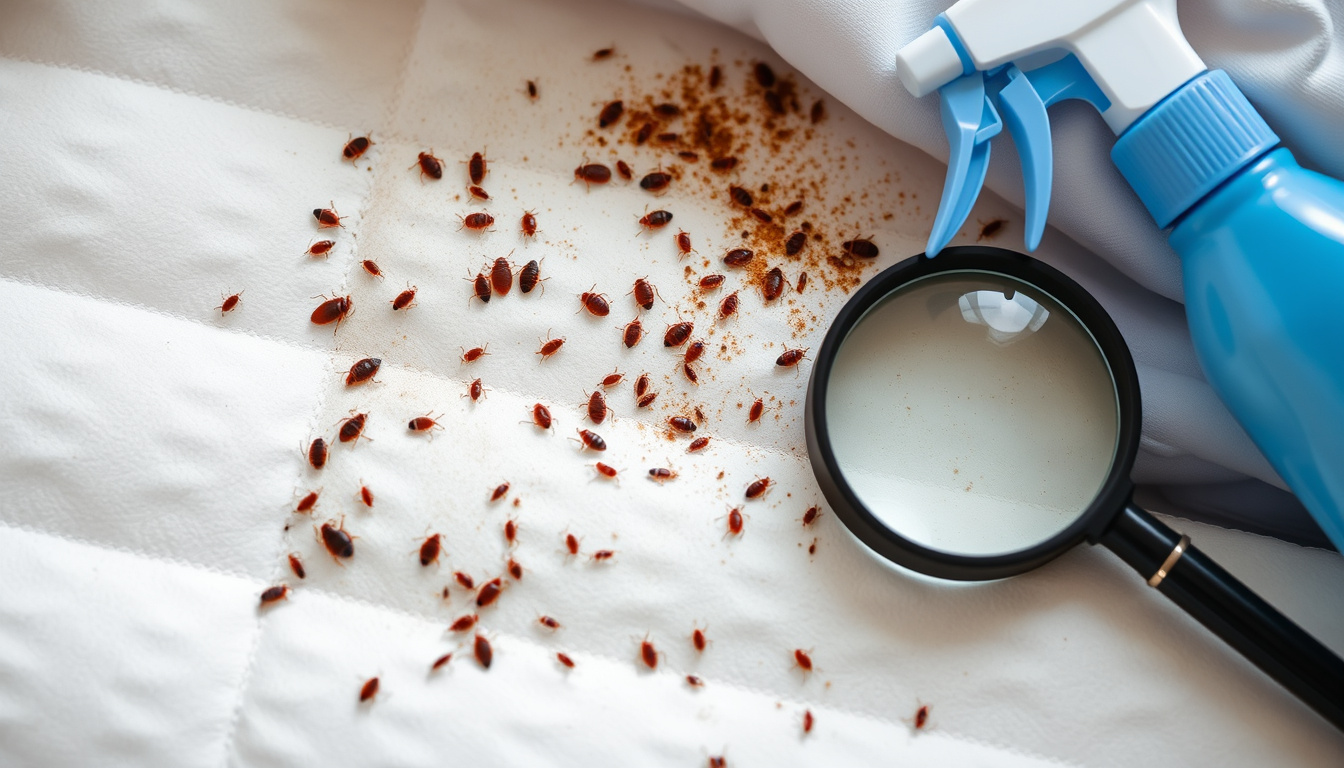
Few household pests trigger as much alarm as bed bugs, yet most people don’t know that these tiny hitchhikers aren’t drawn by dirt or neglect. Whether you’ve spotted suspicious bites or a rusty stain on your sheet, knowing exactly what you’re dealing with is the first step to taking control.
Adult bed bug length: 4–5 mm (about the size of an apple seed) ·
Feeding frequency: Every 5–10 days ·
Survival without feeding: Several months to over a year ·
Number of eggs laid per day: 1–5 eggs ·
Time from egg to adult: Approximately 5 weeks under optimal conditions
Quick snapshot
- Bites on skin, often in lines or clusters (CDC About Bed Bugs)
- Blood spots on sheets and pillows (CDC About Bed Bugs)
- Dark fecal stains on mattress seams (CDC DPDx)
- Shed skins and eggs (Penn State Extension)
- Musty odor from scent glands (CDC About Bed Bugs)
- Travel—luggage and clothing pick up hitchhikers (US EPA DIY Bed Bug Control)
- Used furniture, especially bed frames and mattresses (CDC DPDx)
- Shared laundry facilities (CDC About Bed Bugs)
- Clutter provides hiding spots, not attraction (US EPA DIY Bed Bug Control)
- Not caused by poor hygiene (CDC About Bed Bugs)
- Heat ≥118°F kills all life stages (Penn State Extension)
- Steam cleaning reaches cracks and fabrics (US EPA DIY Bed Bug Control)
- EPA-registered insecticides that list bed bugs on label (US EPA Pesticides to Control Bed Bugs)
- Desiccant dusts like diatomaceous earth (Beyond Pesticides)
- Professional Integrated Pest Management (IPM) (US EPA DIY Bed Bug Control)
- Encase mattresses and box springs (US EPA DIY Bed Bug Control)
- Inspect second-hand items before bringing in (CDC About Bed Bugs)
- Use luggage racks and keep bags off hotel floors (US EPA DIY Bed Bug Control)
- Declutter to reduce hiding spots (US EPA DIY Bed Bug Control)
- Vacuum regularly and dispose of vacuum bag (Penn State Extension)
Five key aspects of bed bug biology help pinpoint an infestation and shape treatment decisions.
| Attribute | Value |
|---|---|
| Adult size | 4–5 mm (apple seed) |
| Feeding habit | Nocturnal blood feeder |
| Lifespan | 4–6 months (up to 1 year in cool conditions) |
| Egg size | 1 mm, pearl white |
| Preferred hiding spots | Mattress seams, box springs, cracks near bed, behind headboards |
What are the first signs of bed bugs?
Early detection saves weeks of frustration. The most common sign is finding adult bed bugs or nymphs in the folds of your mattress or sheets, as noted by the CDC DPDx laboratory. Look for rusty or reddish stains—crushed bugs—and dark, pepper-like fecal spots. Penn State Extension adds that shed skins and egg casings are also telltale. Bites often appear on exposed skin after sleep, though the inflammatory reaction alone isn’t diagnostic, per the CDC.
How to know 100% if you have bed bugs?
The only reliable way is to physically collect a specimen. The CDC DPDx states that a confirmed diagnosis requires finding adults or nymphs near where a person was bitten. You can also use a sticky trap near the bed leg. Extension agents can identify samples at no cost, according to EPA guidance.
Can bed bugs live in pillows?
Yes, though they prefer the crevices of the mattress and box spring. Pillows with zippered seams provide hiding spots. CDC About Bed Bugs notes that bed bugs can be found in any fabric that touches human resting areas, including pillows, cushions, and stuffed animals. Washing on high heat and drying on high for 30 minutes kills them.
What is the main cause of bed bugs?
Bed bugs are hitchhikers, not homegrown. The US Environmental Protection Agency identifies travel as the primary vector: they crawl into luggage, clothing, and furniture. Used mattresses and shared laundry rooms are common conduits. Clutter doesn’t attract them, but it gives them more places to hide, making eradication harder.
Are bed bugs due to poor hygiene?
No. The CDC explicitly states that bed bugs are not a sign of dirty homes. They are found in five-star hotels and hospital rooms alike. The confusion arises because infestations become more noticeable in cluttered environments, but the bugs themselves don’t originate from filth.
Even pristine homes get bed bugs. Blaming cleanliness shifts focus from the real cause—human movement and second-hand items—and delays proper inspection.
The implication: focusing on cleanliness distracts from the real prevention strategies.
What kills bedbugs immediately?
Penn State Extension reports that heat is the most reliable immediate killer: holding a room at 140°F for two hours kills all life stages. Steam cleaning works on contact because wet steam penetrates cracks and fabric. EPA-registered insecticides with bed bugs listed on the label can provide fast knockdown, but resistance is a growing problem.
What is a 100% way to get rid of bed bugs?
There is no single silver bullet. The EPA promotes Integrated Pest Management (IPM): combine heat, steam, vacuuming, encasements, and targeted pesticides. Professional heat treatment combined with chemical follow-ups comes closest, but it’s expensive and requires preparation.
What kills bedbugs permanently?
Permanent control demands persistence. Beyond Pesticides emphasizes that a single treatment rarely works because eggs can survive and hatch later. Encasing mattresses and box springs traps any survivors, while desiccant dusts like diatomaceous earth dehydrate insects over weeks. Regular inspections and repeat treatments are essential.
The pattern: immediate methods must be part of a broader strategy to be effective.
What kills bedbugs permanently?
As noted, permanent eradication comes from an IPM strategy that targets all life stages. EPA recommends a six-step sequence: identify, plan, contain, prepare, treat, and evaluate. The CDC Clinical Care adds that preventing re-infestation requires sealing cracks, monitoring traps, and periodic re-treatment for at least several months.
Bed bugs are developing resistance to pyrethroid insecticides. EPA advises rotating chemical classes and using non-chemical methods first.
What this means: resistance is a growing concern that makes non-chemical methods even more important.
How to get rid of bed bugs?
Follow the EPA’s DIY sequence, which combines chemical and non-chemical tactics. Start with identification: collect a sample and get a free ID from your local extension service. Then contain the area by isolating the bed with interceptors. Prepare the room by washing all bedding on high heat and decluttering. Treatment involves steam, vacuuming, and applying EPA-approved insecticides only where the label says bed bugs. Monitor with traps and repeat as needed.
What to do if you have bed bugs?
- Do not panic—bed bugs do not transmit disease (CDC).
- Notify your landlord if you rent (EPA).
- Avoid moving to another room to prevent spread.
- Call a licensed pest control operator for inspection and treatment.
- Isolate infested items in sealed plastic bags.
What to do if you have bed bugs?
These actions are critical in the first 24 hours. The EPA stresses not using bug bombs or foggers—they scatter bed bugs deeper into walls. Instead, vacuum thoroughly and dispose of the vacuum bag outside. The CDC Clinical Care notes that bite treatment is minimal: wash the area, apply antiseptic cream, and use antihistamines for itching. Avoid scratching to prevent secondary infection.
Upsides
- IPM combines heat, steam, and chemicals for broad effectiveness (EPA)
- Non-chemical methods like encasements and dusts have no resistance issues (Beyond Pesticides)
- Professional heat treatment eliminates all life stages in one day if done correctly (Penn State Extension)
Downsides
- Over-the-counter sprays may be ineffective due to pyrethroid resistance (EPA)
- DIY treatments require multiple rounds over months (EPA)
- Heat treatment is expensive (often $1,000–$2,500) and requires professional execution
The catch: no single solution works for everyone; the choice depends on budget and persistence.
Step-by-step: EPA’s DIY control sequence
- Identify – Collect a sample and get a free ID from your local extension agent (EPA).
- Develop a plan – Decide which rooms to treat and when (EPA).
- Contain – Isolate the infestation: use mattress encasements, interceptors on bed legs, and seal cracks (EPA).
- Prepare – Wash and heat-dry bedding, declutter, move furniture away from walls (EPA).
- Treat – Use steam, vacuum, and EPA-registered pesticides labeled for bed bugs (EPA).
- Evaluate and prevent – Inspect weekly with traps and re-treat as needed (EPA).
Following these steps systematically increases the chance of success.
What’s confirmed, what’s unclear
Confirmed facts
- Bed bugs feed exclusively on blood (CDC DPDx)
- They do not transmit diseases (CDC)
- They can survive months without feeding (EPA)
What’s unclear
- Heat over 118°F kills all life stages (Penn State Extension)
- Long-term efficacy of OTC insecticides due to resistance (EPA)
- Whether essential oils provide reliable control (Beyond Pesticides notes limited evidence)
- Extent of bed bug resistance to pyrethroids (EPA flags emerging concern)
Expert perspectives
“Integrated Pest Management is the most effective approach. No single method works alone; you need to combine heat, vacuuming, and targeted pesticides.”
— US EPA (Environmental Protection Agency) guidance on bed bug control
“Bed bugs are not a sign of dirty homes. They are hitchhikers that can be picked up anywhere.”
— CDC (Centers for Disease Control) fact sheet on bed bugs
“Bed bugs do not spread infectious diseases, but their bites can cause significant itching and secondary infections.”
— CDC Clinical Care on bed bug bite management
The trade-off is clear: bed bugs are a nuisance, not a health crisis. But the emotional and financial toll of a persistent infestation is real. For anyone facing an active infestation, the smartest move is to start with non-chemical methods—heat, steam, encasements—and bring in a professional IPM operator if the problem doesn’t resolve after two weeks. For homeowners in the United States, the choice between DIY and professional treatment boils down to your tolerance for multiple rounds of work and the confidence you have in your ability to follow through on the full EPA protocol. Use the EPA’s DIY sequence, but be ready to call a licensed pest control operator if the infestation returns after 30 days.
thedoctorsofficeurgentcare.com, youtube.com, cdc.gov, epa.gov, healthline.com, stacks.cdc.gov, orkincanada.ca
For a comprehensive overview of bed bug signs, causes, and removal, this guide offers practical advice on identifying and eliminating these pests.
Frequently asked questions
Do bed bugs transmit diseases?
No. The CDC confirms that bed bugs are not known to spread diseases. Their bites can cause itching and secondary infections from scratching, but they are not vectors.
How do bed bugs travel from place to place?
They hitchhike on luggage, clothing, used furniture, and bedding. The EPA says travel is the most common cause of infestation.
Can bed bugs survive in cold temperatures?
They can survive in near-freezing conditions for short periods, but prolonged cold below 0°F may kill them. However, the Penn State Extension notes that cold treatment is unreliable compared to heat.
Should I throw away my mattress if I have bed bugs?
Not necessarily. The EPA recommends encasing your mattress and box spring in special covers. Throwing it away can spread the infestation if the bugs crawl off elsewhere.
Do bed bugs only live in beds?
No. They can hide in any crack or crevice near human resting spots: chairs, sofa seams, baseboards, even behind picture frames. The CDC notes they are often found in luggage and clothing.
How long does it take for bed bug bites to appear?
Some people react within hours; others don’t show reactions for up to 14 days. The CDC DPDx says inflammatory response is highly variable, so bites alone are not diagnostic.
Are bed bug infestations seasonal?
They are not strictly seasonal, but infestations often spike during summer travel months. The EPA observes that increased movement of people increases the risk of picking up hitchhikers.
Can I treat bed bugs myself without a professional?
Yes, but it requires thoroughness. Follow the EPA’s DIY protocol. If the infestation persists after a few weeks, or if you’re in a multi-unit building, professional help is advised.
Related stories





Jonathan MacDonald is Editor-in-Chief at Civic Maple, overseeing editorial standards, publication decisions and corrections.