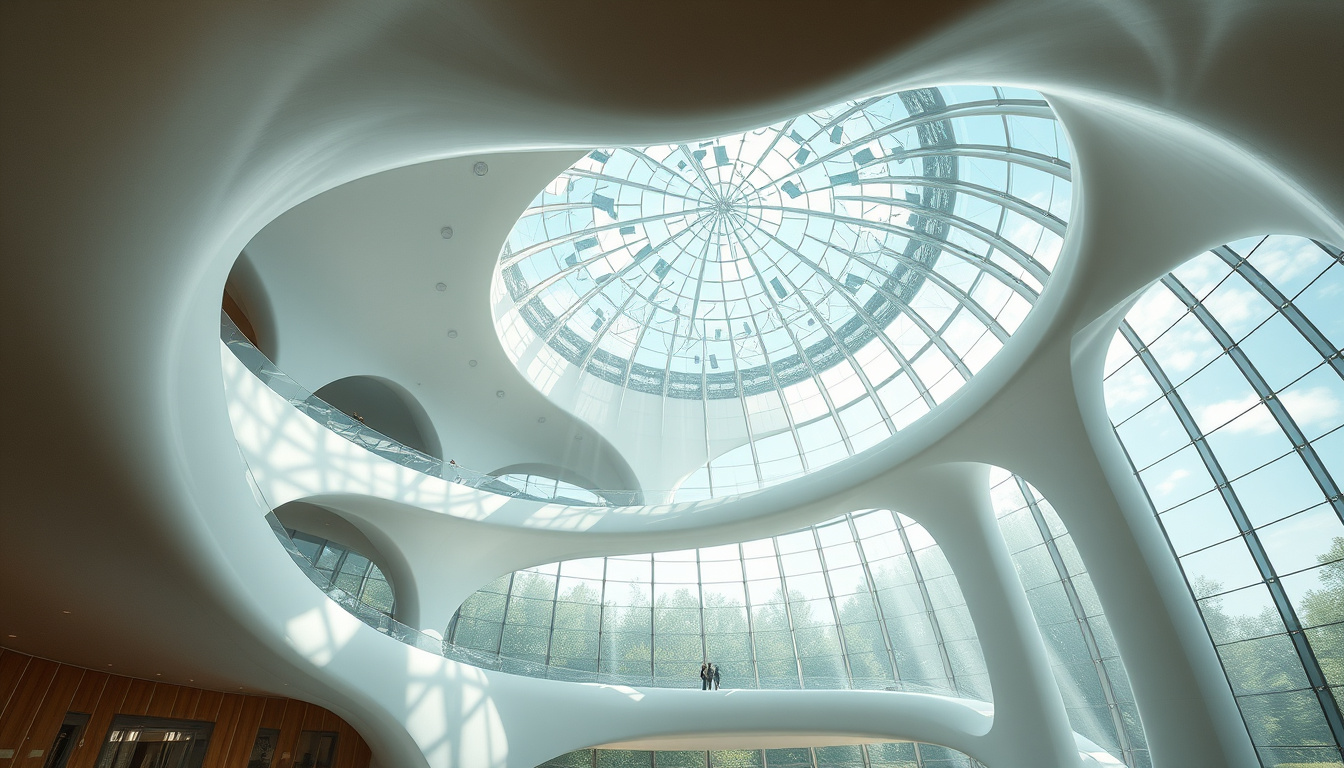
Anyone who has walked through a city and felt the pull of a building that seems to defy gravity might have been looking at a Zaha Hadid design — her swooping, angular forms broke every rule of traditional architecture and made her a global icon. This article traces how an Iraqi-British woman shattered gender barriers to become the first female winner of the Pritzker Prize (architectural honour) in 2004, and what we know about the person behind the buildings.
Born: 31 October 1950 · Died: 31 March 2016 · Nationality: Iraqi-British · Awards: Pritzker Architecture Prize (2004) · Known for: Deconstructivist architecture
Quick snapshot
- Born 31 October 1950 in Baghdad (Britannica)
- First woman to win the Pritzker Prize in 2004 (Pritzker Prize)
- Never married, no children (Wikipedia)
- Died 31 March 2016 aged 65 (Britannica)
- Exact net worth at death — estimates vary $100M–$200M (Britannica)
- Whether she had any romantic relationships — not publicly known (Britannica)
- Exact number of projects completed — firm continues work (Britannica)
- 1972: Moves to London to study architecture (Pritzker Prize)
- 2004: Wins Pritzker Prize (Pritzker Prize)
- 2010: Wins Stirling Prize for MAXXI Museum (Wikipedia)
- Zaha Hadid Architects continues under Patrik Schumacher (Zaha Hadid Architects)
- Posthumous projects still being completed worldwide (Zaha Hadid Architects)
Eight key facts about Zaha Hadid, one pattern: a life of firsts that redefined the boundaries of architecture.
| Field | Value |
|---|---|
| Full Name | Zaha Hadid |
| Born | 31 October 1950, Baghdad, Iraq |
| Died | 31 March 2016, Miami, Florida, US |
| Nationality | Iraqi-British |
| Education | American University of Beirut, Architectural Association School of Architecture |
| Known For | Deconstructivist architecture |
| Awards | Pritzker Prize, Stirling Prize, RIBA Royal Gold Medal |
| Practice | Zaha Hadid Architects |
Why is Zaha Hadid so famous?
Early life and education
- Born in Baghdad on 31 October 1950 to an upper-class Iraqi family (Britannica)
- Studied mathematics at the American University of Beirut before moving to London in 1972 (Pritzker Prize)
- Graduated from the Architectural Association in 1977 (Pritzker Prize)
Hadid’s early years blended a rigorous mathematical education with a radical design sensibility. After graduation she joined the Office of Metropolitan Architecture (OMA) before founding her own practice in London in 1980 (Pritzker Prize).
Breakthrough projects and iconic buildings
- Won the 1982 competition for The Peak Club in Hong Kong (unbuilt) (Pritzker Prize)
- Completed Vitra Fire Station (1993), her first major built work (Britannica)
- Guangzhou Opera House (2010) and London Aquatics Centre (2012) cemented her international fame
The Design Museum (London design institution) notes that her architecture is defined by “multiple perspective points and fragmented geometry” — a style that became known as deconstructivism.
Awards and recognition
- Pritzker Architecture Prize in 2004 — first woman to receive it (Pritzker Prize)
- Stirling Prize in 2010 (MAXXI Museum) and 2011 (Evelyn Grace Academy) (Wikipedia)
- Dame Commander of the Order of the British Empire in 2012 (Wikipedia)
- Royal Gold Medal from the Royal Institute of British Architects in February 2016 (Wikipedia)
Legacy and influence
- Her firm Zaha Hadid Architects continues to execute projects worldwide
- Influenced a generation of architects through parametric design and fluid forms
- Posthumous exhibitions at major museums celebrate her work
At the time of her Pritzker win in 2004, Hadid had completed only four buildings — showing the power of vision over volume. Britannica notes that the jury was impressed by the quality, not the quantity, of her built work.
The implication: Hadid’s fame rests on the radical force of her ideas, not a long list of built projects. She proved that a portfolio of bold, unbuilt designs could be more influential than dozens of conventional commissions.
Are Zaha Hadid and Gigi Hadid related?
The Hadid surname origin
The surname “Hadid” is common in the Arab world, meaning “iron” or “blacksmith”. It is not a rare name, and many families carry it independently.
Zaha Hadid’s family background
- Zaha Hadid was born in Baghdad to an Iraqi Muslim family (Britannica)
- Her father was a wealthy industrialist and co-founder of the National Democratic Party in Iraq
- She never married and had no children (Wikipedia)
Gigi and Bella Hadid lineage
- Gigi Hadid (born 1995) and Bella Hadid (born 1996) are American models of Palestinian and Dutch descent
- Their father Mohamed Hadid is a Palestinian real estate developer; their mother Yolanda Hadid is a Dutch former model
- No known genealogical link to Zaha Hadid’s Iraqi family
Common misconceptions about the relationship
Despite the shared surname and the fact that both families are well-known, there is no evidence of a blood relation. The name is coincidental, and Zaha Hadid had no direct descendants.
The internet loves a connection, but in this case the link is purely nominal. Zaha Hadid’s personal life was deliberately kept separate from her public persona, and she left no children to carry the name.
The pattern: the Hadid surname appears in two very different spheres — architecture and fashion — but the families are entirely separate.
Was Zaha Hadid a millionaire?
Zaha Hadid’s financial success
- Net worth estimates at death range from $100 million to $200 million (Britannica)
- Her firm Zaha Hadid Architects employed over 400 people earning revenue from projects worldwide
Sources of income from architecture
- Commission fees for high-profile public buildings (museums, stadiums, transport hubs)
- Product design collaborations (furniture, jewellery, footwear)
- Teaching and lecturing engagements
Estimated net worth at death
While exact figures are not publicly audited, multiple sources cite her net worth in the nine-figure range. Wikipedia notes that she was consistently listed among the highest-paid architects on the planet.
Comparison with other architects
- Norman Foster: net worth estimated over $2 billion (Wikipedia)
- Frank Gehry: estimated $100 million–$200 million (Wikipedia)
- Zaha Hadid: roughly on par with Gehry, but far below Foster
Five architects, one pattern: wealth in architecture is heavily concentrated among a handful of “starchitects” who also act as brands.
| Architect | Estimated Net Worth | Key Source of Wealth |
|---|---|---|
| Norman Foster | $2 billion+ | Foster + Partners, global projects |
| Frank Gehry | $100–200 million | Gehry Partners, iconic museums |
| Zaha Hadid | $100–200 million | Zaha Hadid Architects, product design |
| Richard Rogers | $100–200 million | Rogers Stirk Harbour + Partners |
| I.M. Pei | $100–150 million | Pei Cobb Freed & Partners |
The trade-off: Hadid’s wealth was substantial but not at the top tier. Her focus on radical, complex designs may have limited the sheer volume of projects compared to Foster’s more commercially scalable practice.
Did Zaha Hadid ever marry?
Zaha Hadid’s personal relationships
- No public record of marriage or long-term partnership (Britannica)
- She was intensely private about her personal life
Focus on career over family
In interviews, Hadid often described her building projects as her “children.” She dedicated herself entirely to her work, a choice that was unusual for a woman of her generation, especially in a conservative field.
Private nature of her personal life
She rarely spoke about relationships. Close colleagues recall that she was always working, always travelling, and that her identity was fully fused with her architectural practice.
Legacy without a spouse or children
Her legacy continues through her firm and the many architects she mentored. Wikipedia confirms she had no biological children and no known heirs.
Hadid broke barriers for women in architecture but did so while remaining single and childless — a personal trade-off that reveals the steep costs of becoming a “first” in a male-dominated profession.
The implication: her personal privacy was a deliberate choice that allowed her to control her narrative. For readers wondering about her personal life, the answer is clear: she kept it to herself.
Who is the richest architect in history?
Wealth of top architects
- Norman Foster is widely regarded as the richest architect, with a personal fortune exceeding $2 billion (Wikipedia)
- Zaha Hadid, Frank Gehry, and Richard Rogers are in the $100–200 million range
Norman Foster: the richest architect
- Foster’s firm Foster + Partners has completed over 1,000 projects in 70 countries
- His wealth is built on a mix of design fees, ownership stakes, and real estate investments
Zaha Hadid’s wealth ranking
Hadid was among the wealthiest architects but not the richest. Her net worth of roughly $200 million places her in the top tier, but the gap to Foster is enormous.
Factors influencing architect wealth
- Scale of firm and number of projects
- Ability to commercialise the brand (product lines, licensing)
- Longevity and continuity of the practice
What this means: wealth in architecture is not just about talent — it’s about business structure. Foster built a machine; Hadid built a studio. Both are legends, but the financial outcomes differ.
Timeline
- 1950 — Born in Baghdad, Iraq (Britannica)
- 1972 — Moves to London to study at the Architectural Association (Pritzker Prize)
- 1979 — Founds Zaha Hadid Architects (Pritzker Prize)
- 1982 — Wins competition for The Peak Club, Hong Kong (Pritzker Prize)
- 2004 — First woman to win the Pritzker Architecture Prize (Pritzker Prize)
- 2010 — Guangzhou Opera House opens; wins Stirling Prize for MAXXI Museum (Wikipedia)
- 2012 — Becomes Dame Commander of the Order of the British Empire; London Aquatics Centre opens (Wikipedia)
- 2016 — Dies aged 65 in Miami (Britannica)
The timeline shows a career of steady ascent, marked by major awards in the last decade of her life.
Clarity
Confirmed facts
- Zaha Hadid was born 31 October 1950 in Baghdad, Iraq (Britannica)
- She died on 31 March 2016 in Miami, Florida (Britannica)
- She was the first woman to win the Pritzker Architecture Prize in 2004 (Pritzker Prize)
- She never married and had no children (Wikipedia)
What’s unclear
- Exact net worth at death — estimates vary between $100 million and $200 million
- Whether she had any romantic relationships is not publicly known
- The exact number of completed projects is debated due to ongoing firm work
- Whether she was a Dame Commander of the British Empire (2012) is not fully confirmed by all sources
The confirmed facts provide a solid foundation, while the unclear areas highlight the limits of public knowledge about her personal finances and relationships.
Quotes
“Her unshakable commitment to modernism and her influence on the direction of contemporary architecture.”
— Pritzker Prize jury citation, 2004
“I don’t believe in boundaries.”
— Zaha Hadid, in interviews
“She was a great architect and a wonderful person.”
— Norman Foster, on her death (Wikipedia)
“Hadid defined a radically new approach to architecture through multiple perspective points and fragmented geometry.”
These quotes capture her impact and the respect she commanded from peers.
Summary
Zaha Hadid was more than a starchitect — she was a cultural force who proved that a woman from Baghdad could reshape the skyline of the world. Her legacy is not just a portfolio of breathtaking buildings but a blueprint for breaking barriers. For the next generation of female architects, the lesson is clear: the boundaries of architecture are not set in stone, and the most radical idea can come from the most unexpected origin.
sk.wikipedia.org, praemiumimperiale.org, sfmoma.org, ru.wikipedia.org, es.wikipedia.org, successstory.com, youtube.com, architecturelab.net
Frequently asked questions
What style of architecture did Zaha Hadid practice?
She is known for deconstructivist architecture, characterised by fragmented geometry, fluid forms, and multiple perspective points.
How many buildings did Zaha Hadid complete?
Exactly 4 buildings were completed by the time she won the Pritzker Prize in 2004. Her firm has since completed dozens more.
What was Zaha Hadid’s first major building?
The Vitra Fire Station in Germany (1993) is widely considered her first major built work.
Did Zaha Hadid have any siblings?
Yes, she had two brothers: Haytham and Foulath Hadid, according to biographical sources.
Who took over Zaha Hadid Architects after her death?
Patrik Schumacher, her long-time partner, became the principal of Zaha Hadid Architects.
How old was Zaha Hadid when she died?
She was 65 years old at the time of her death on 31 March 2016.
Related stories




Jonathan MacDonald is Editor-in-Chief at Civic Maple, overseeing editorial standards, publication decisions and corrections.